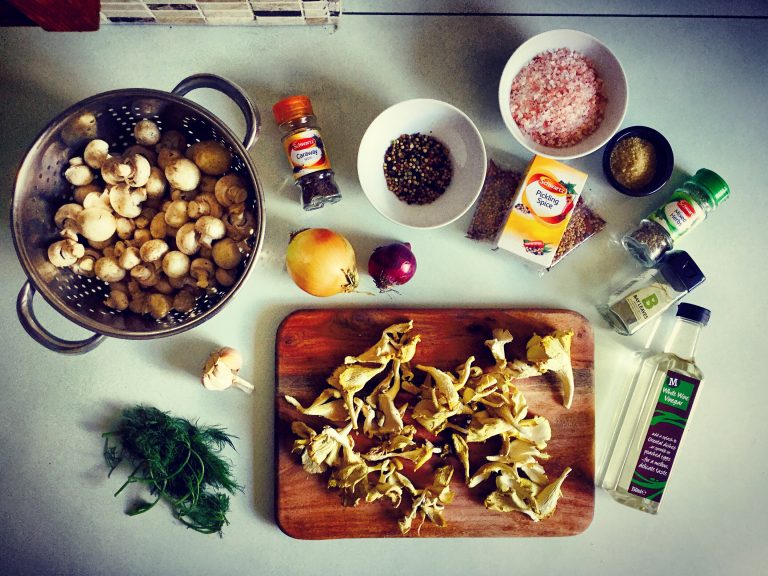
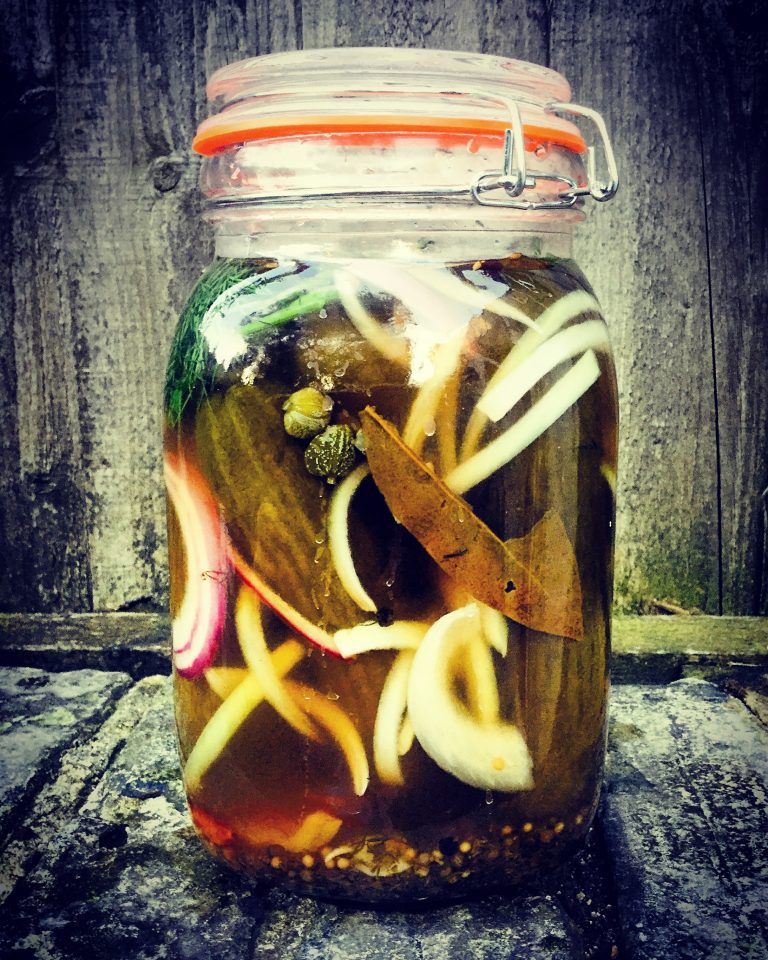
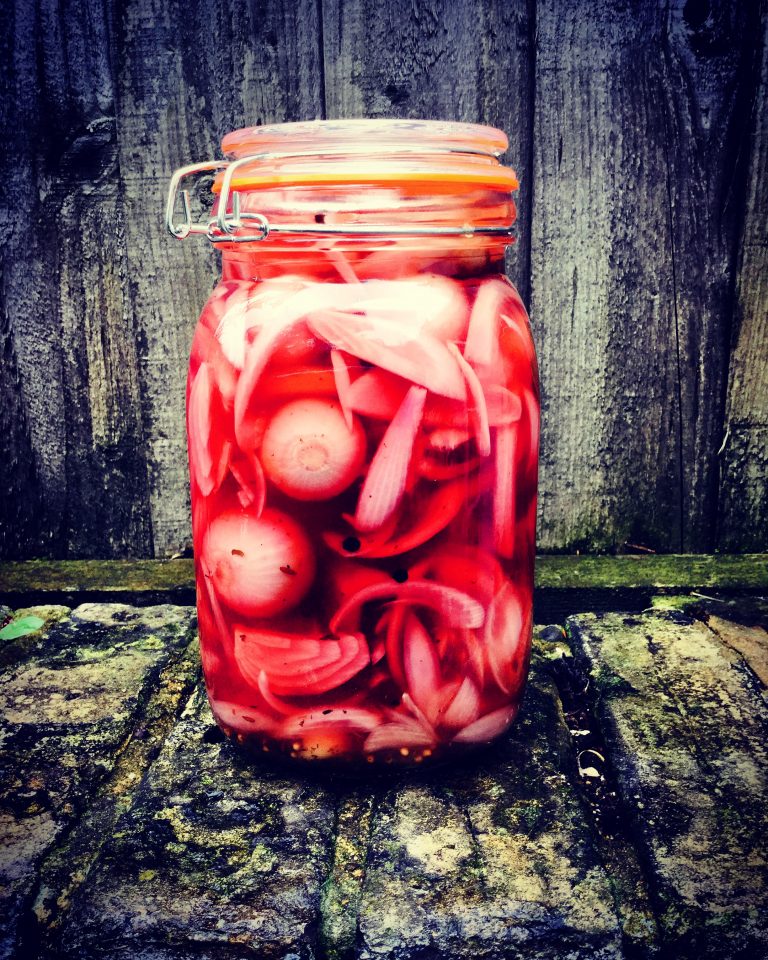
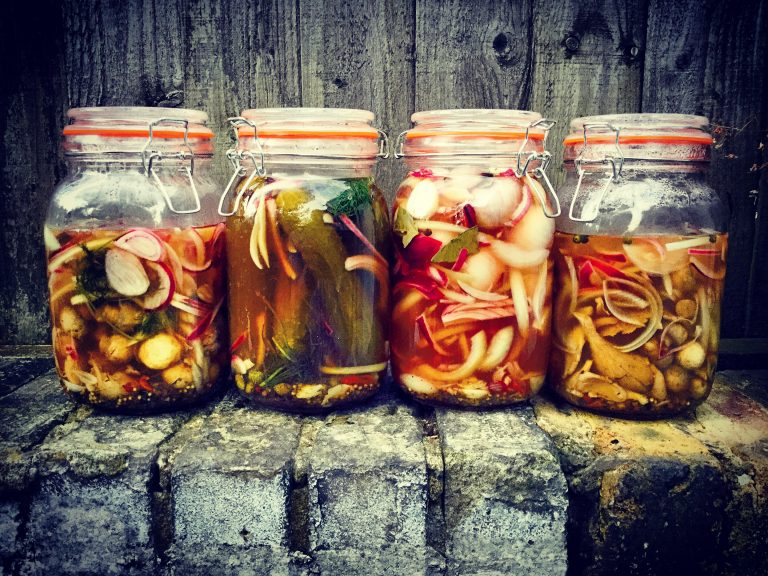
Quick pickles (also called refrigerator or fresh-pack pickles) are vegetables covered with a hot, seasoned vinegar brine and kept in the fridge. They’re ready in a day or two, stay crunchy and bright, and need no fermenting. The trade-off: they’re soured by vinegar rather than by bacteria, so they don’t contain live cultures – and unless you follow a tested canning recipe, they must be stored in the refrigerator.
Quick Pickles vs Fermented Pickles
| Quick (vinegar) pickles | Fermented pickles | |
|---|---|---|
| Soured by | Added vinegar | Lactic acid bacteria in a salt brine |
| Ready in | 1–2 days | 1–4 weeks |
| Live cultures | No | Yes, if not heated |
| Flavor | Sharp, clean, vinegary | Rounder, sour, slightly funky |
| Storage | Refrigerator (or tested canning recipe) | Refrigerator once fermented |
For the fermented kind, see our fermented dill pickles and fermented vs pickled.
The Brine
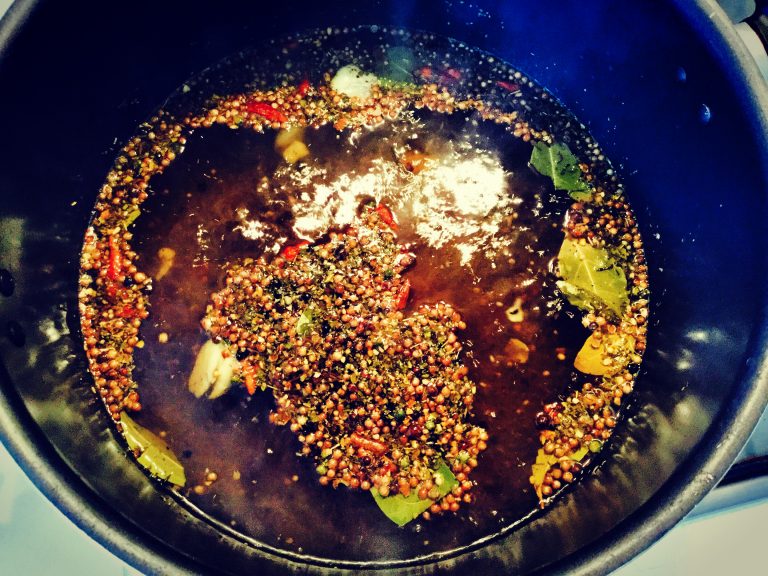
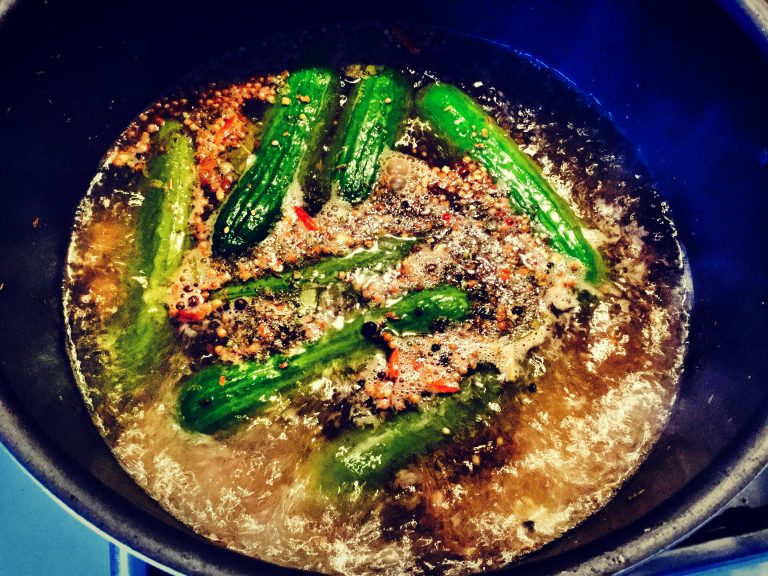
A simple refrigerator brine is equal parts vinegar and water, with salt and a little sugar, brought to a boil with spices. Use vinegar labeled 5% acidity – the strength tested food preservation recipes rely on – and don’t dilute it further (NCHFP). Homemade vinegar won’t do here, because its strength is unknown; see how to make vinegar at home for what it is good for.
- 250 ml (1 cup) 5% white wine, cider or distilled vinegar
- 250 ml (1 cup) water
- 1 tablespoon salt (about 15–18 g)
- 1–2 tablespoons sugar (optional)
- Pickling spices: mustard and coriander seeds, peppercorns, bay leaves, dill seed, chili
Storing Quick Pickles Safely
- Keep them in the fridge from the start, and eat them within a few weeks for the best texture.
- Don’t keep refrigerator pickles at room temperature. They haven’t been heat-processed, and there’s no guarantee the acid is high enough everywhere in the jar.
- For shelf-stable pickles, use a tested recipe with boiling-water processing – for example NCHFP’s quick fresh-pack dill pickles – and don’t change the vinegar, food or water proportions. NCHFP warns that there must be a minimum, uniform level of acid throughout to prevent the growth of botulinum bacteria.
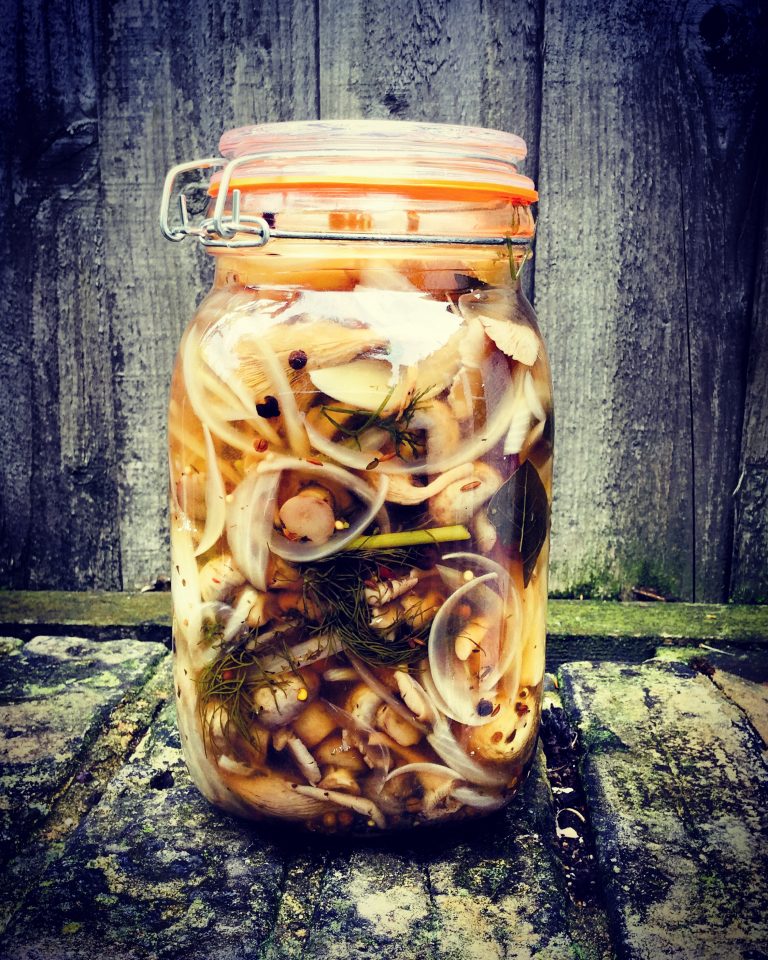
- Mushrooms and other low-acid vegetables need extra care: refrigerate them and eat them within a week or so, or follow NCHFP’s tested marinated whole mushrooms recipe for canning.
What to Quick-Pickle
- Cucumbers / gherkins: whole small ones, spears or slices; trim the blossom end.
- Red onions: thinly sliced, ready in an hour – great on tacos and salads.
- Carrots, radishes, cauliflower, green beans, peppers: cut small or blanch briefly so the brine gets in.
- Mushrooms: simmer them in the brine first, and keep them refrigerated.
Want live cultures? Try lacto-fermented mushrooms, fermented carrots or fermented banana peppers.