Fermented Food

Fermented Mushrooms: How to Lacto-Ferment Mushrooms Safely

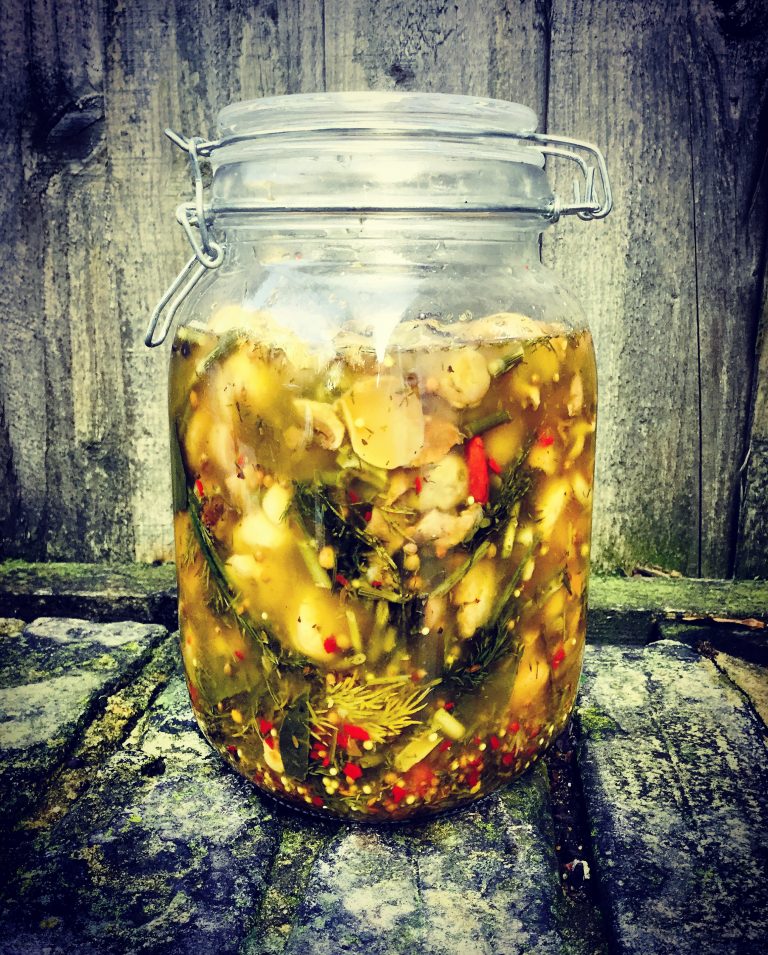
A clip-top jar of finished fermented mushrooms in golden brine with dill and red chilies

At a glance

To lacto-ferment mushrooms, simmer them for 5–15 minutes, drain, pack them into a jar with garlic, dill and spices, and cover with a cooled 3% brine plus 2–3 tablespoons of brine from an active ferment and a teaspoon of sugar. Keep them submerged at 65–75°F (18–24°C) for 5–10 days, and eat them only once they taste clearly sour.

  • Simmer mushrooms first: boiling moves about half of their agaritine into the water within 5 minutes.
  • Blanched mushrooms need a starter (brine from an active ferment) and a little sugar.
  • Brine: 3% salt – 15 g per 500 ml of water.
  • Mushrooms are low-acid: eat them only once they taste clearly sour (or measure below pH 4.6).
  • Only use mushrooms you're certain are edible.

Ferment profile

Origin
Eastern Europe
Fermentation
Lactic acid
Main microbes
Lactic acid bacteria, e.g. Leuconostoc mesenteroides and Lactiplantibacillus plantarum
Live cultures
Yes
Alcohol
None / trace

Recipe: Lacto-Fermented Mushrooms

Makes
1-litre (1-quart) jar
Hands-on
30 min
Fermentation
5–10 days at 65–75°F (18–24°C)
Salt
3% brine: 15 g salt per 500 ml water
Temperature
65–75°F (18–24°C)
Difficulty
Moderate

Equipment

  • Saucepan
  • 1-litre (1-quart) jar
  • Fermentation weight or brine-filled bag
  • Airlock or loose lid
  • Kitchen scale; pH meter (optional)

Ingredients

  • 500 g button, chestnut or oyster mushrooms (cleaned; halved if large)
  • 500 ml water (for the brine)
  • 15 g non-iodized salt (3%)
  • 1 tsp sugar (food for the bacteria)
  • 2–3 tbsp brine from an active ferment (e.g. sauerkraut or pickles)
  • 3–4 garlic cloves (sliced)
  • A few sprigs fresh dill, 2 bay leaves, 1 tsp peppercorns

Method

  1. Simmer the mushrooms in plenty of water for 5–15 minutes until tender, then drain them (discard this cooking water).
  2. Dissolve the salt and sugar in 500 ml of fresh water and let it cool completely.
  3. Pack the cooled mushrooms into the jar with the garlic, dill, bay leaves and peppercorns.
  4. Stir the starter brine into the salt water and pour it over until the mushrooms are covered by at least 1 inch (2.5 cm).
  5. Weigh the mushrooms down and cover with an airlock or loose lid.
  6. Leave at 65–75°F (18–24°C) for 5–10 days. The brine should turn cloudy and bubbly.
  7. Eat them only once they taste clearly sour; then refrigerate. Discard if they're still flat after a week, or smell rotten.

Lacto-fermented mushrooms are simmered mushrooms left in a salted, spiced brine until they turn sour, savory and juicy – a traditional pickle in Eastern Europe and a great sandwich, salad or cheese-board topping. Mushrooms behave differently from cabbage or cucumbers, though: they’re low in sugar and low in acid, and they should be cooked first. That changes how you ferment them. Here’s a reliable method, and the spiced batch we first made and photographed in 2016.

Why Simmer Mushrooms First?

Cultivated button mushrooms contain agaritine, a naturally occurring compound, and cooking reduces it. In one study, boiling moved about half of the agaritine into the cooking water within 5 minutes and broke down another 20–25%; frying and microwaving reduced it too (Schulzová et al., 2002). A short simmer also softens the mushrooms and lets them absorb the brine. Pour off or dilute the first cooking water if you want to lower agaritine further, rather than using it all as brine.

Only ferment mushrooms you’re certain are edible – store-bought button, chestnut, oyster or shiitake, or wild mushrooms identified by an expert.

Why Mushrooms Need a Starter

Simmering kills most of the bacteria on the mushrooms, and mushrooms contain little sugar for lactic acid bacteria to feed on. That’s why research on fermenting button mushrooms uses blanched mushrooms with a starter culture and added sugar (Jabłońska-Ryś et al., 2022). At home, add 2–3 tablespoons of brine from an active ferment (sauerkraut or pickles) and a teaspoon of sugar to give the fermentation a reliable start. Spontaneously fermented button mushrooms, left to themselves, were dominated by Leuconostoc mesenteroides (Skrzypczak et al., 2020).

How to Tell It Has Worked

Mushrooms are a low-acid food, so a failed ferment isn’t just a flavor problem. Before eating, the mushrooms and brine should taste clearly sour, and the brine should be cloudy with bubbles. If you have a pH meter, check that it’s well below 4.6. If they still taste flat and salty after about a week at room temperature, or smell rotten or musty, throw them out.

Flavor Ideas

  • Dill and garlic (Eastern European style): fresh dill, garlic, bay leaves and peppercorns.
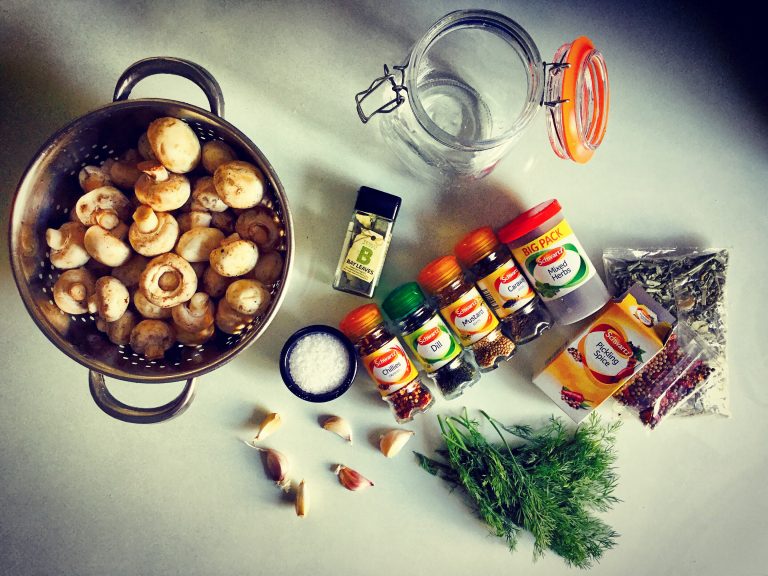
  • Spiced (our 2016 batch): pickling spices, caraway, mustard seeds, dried dill, chilies and mixed herbs.
  • Thyme and chili: fresh thyme sprigs, a dried chili and a strip of lemon zest.

Troubleshooting

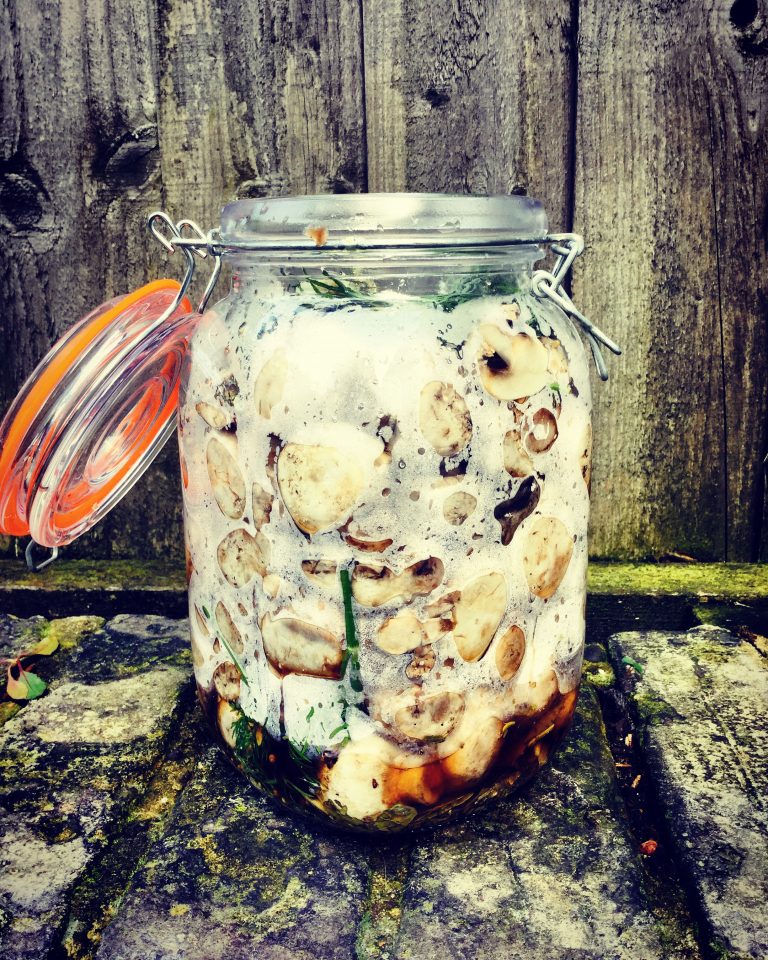
  • Foam at the start: normal when pouring the cooled liquid over the mushrooms.
  • Floating mushrooms: weigh them down – anything above the brine can mold.
  • White film: a flat film is usually kahm yeast; skim it off. Fuzzy or colored mold means discard (NCHFP).
  • Not sour after a week: discard and start again with a starter and a little sugar.
  • Slimy or rotten smell: discard.

How to Use Fermented Mushrooms

  • Sliced onto sandwiches, burgers and grain bowls.
  • With cheese, cured meats and bread.
  • Chopped into salads with onion and a little oil, as in Eastern Europe.

More: the best vegetables to ferment, our sauerkraut recipe (a good source of starter brine) and quick vinegar pickles, including pickled mushrooms.
From our kitchen

Our original fermented mushroom recipe, first published here in 2016, used 500 g of mixed mushrooms with 6 garlic cloves, a handful of fresh dill, 3 bay leaves, 2 tablespoons of salt, a sachet of pickling spices, and a tablespoon each of mixed herbs, caraway seeds, mustard seeds, dried dill and chilies, in a 1.5-litre clip-top jar.

We brushed the mushrooms clean, left them whole or cut them to bite size, and simmered them gently in about a litre of water for 15 minutes until soft and darker. We put half the salt, herbs, spices and garlic in the jar, added the drained mushrooms and the rest of the spices, let the cooking liquid cool and poured it over to cover. We left it out of the sun for about 10–14 days, until the mushrooms were salty, sour, spicy, soft and juicy.

What we’d change today: we’d add a few spoonfuls of brine from an active ferment and a teaspoon of sugar to make sure the fermentation gets going, weigh the mushrooms down instead of opening and stirring the jar, and start each batch fresh rather than topping up the old brine.

Ingredients for fermented mushrooms: a colander of button mushrooms, fresh dill, garlic, salt, jars of spices and a clip-top jar
Our 2016 ingredients: button mushrooms, garlic, dill, salt and spices.
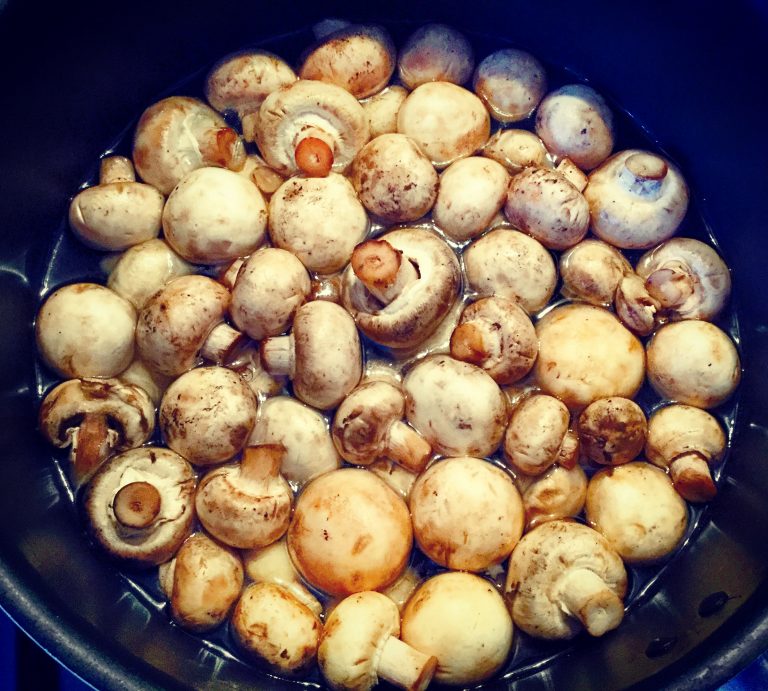
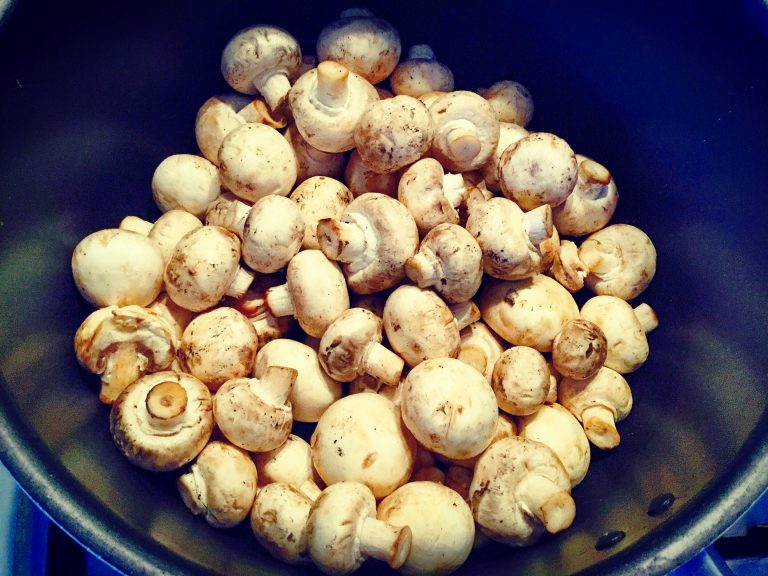
Whole button mushrooms in a pan before cooking
Cleaned mushrooms ready to simmer.
Button mushrooms simmering in water in a pan
Simmered gently for about 15 minutes.
A clip-top jar of cooked mushrooms with foam on top after the cooled liquid was poured over
The cooled liquid poured over – foam at this stage is normal.
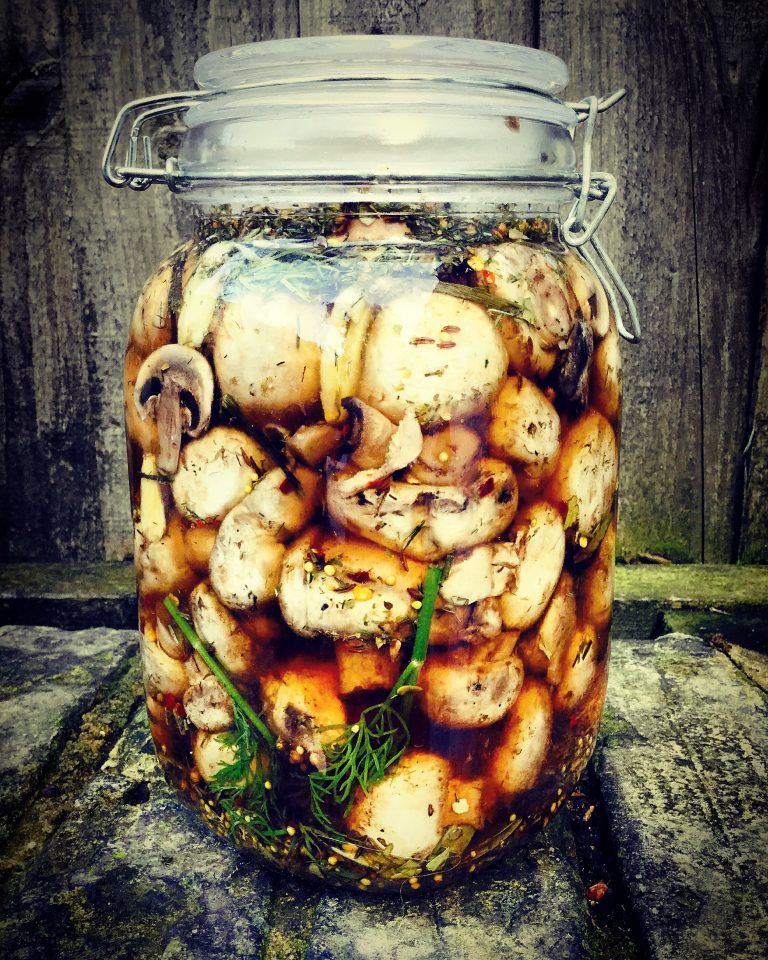
A clip-top jar of mushrooms in brine with dill and spices
Covered with the spiced brine.
A clip-top jar of finished fermented mushrooms in golden brine with dill and red chilies
The finished jar.

Frequently asked questions

Can you ferment mushrooms?

Yes. Simmer them first, then ferment them in a salt brine with a starter and a little sugar. They turn sour and savory in about 5–10 days.

Do mushrooms need to be cooked before fermenting?

Yes. Cooking softens them and reduces agaritine, a compound in button mushrooms – boiling moved about half of it into the water within 5 minutes in one study.

Why won't my mushrooms ferment?

Cooked mushrooms have few live bacteria and little sugar. Add a few spoonfuls of brine from an active ferment and a teaspoon of sugar. If they still aren't sour after a week, discard them.

How do I know fermented mushrooms are safe?

They should taste clearly sour, with cloudy, bubbly brine and no mold or rotten smell. Measuring the brine with a pH meter (well below 4.6) is the most reliable check.

Can I ferment wild mushrooms?

Only if an expert has identified them as edible. Fermentation doesn't make poisonous mushrooms safe.

What's the difference between fermented and pickled mushrooms?

Pickled mushrooms are preserved in vinegar and have no live bacteria. Fermented mushrooms are soured by lactic acid bacteria in a salt brine.

How long do fermented mushrooms last?

Refrigerated and kept under their brine, they keep for weeks to a few months. Discard them if they grow mold or smell off.

Sources

  1. Schulzová V et al. (2002). Influence of storage and household processing on the agaritine content of the cultivated Agaricus mushroom. Food Addit Contam 19(9):853–862. Link
  2. Jabłońska-Ryś E et al. (2022). Dynamics of changes in pH and the contents of free sugars, organic acids and LAB in button mushrooms during controlled lactic fermentation. Foods 11(11):1553. Link
  3. Skrzypczak K et al. (2020). Spontaneously fermented fruiting bodies of Agaricus bisporus as a valuable source of new isolates of lactic acid bacteria. Foods 9(11):1631. Link
  4. National Center for Home Food Preservation. Causes and possible solutions for problems with fermented pickles. Link
Share: