Fermented Dairy

How to Make Milk Kefir at Home: Grains, Ratio, Temperature and Timing

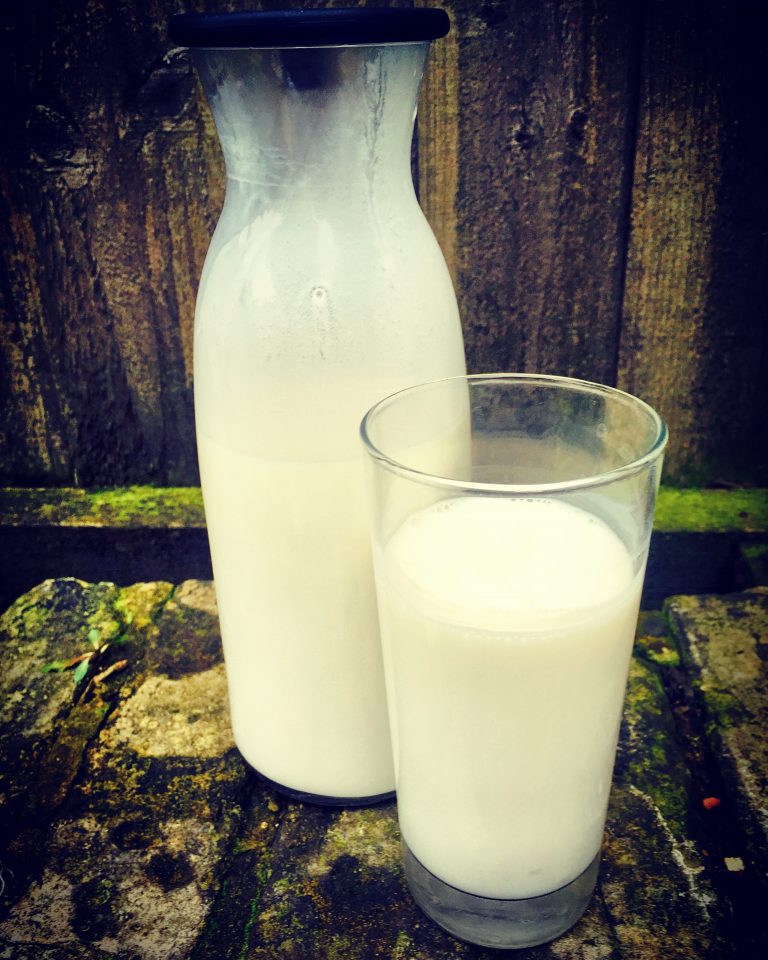
A bottle and a glass of finished homemade kefir on a stone wall

At a glance

To make milk kefir, put about 20–50 g of kefir grains in a litre of pasteurized milk, cover loosely and leave it at 20–25°C for about 24 hours, until thick and pleasantly sour (around pH 4.2–4.6). Strain out the grains, refrigerate the kefir and put the grains straight into fresh milk.

  • Grains per milk: 2–10% by weight in studies; 20–50 g per litre is a good start.
  • Ferment at 20–25°C for about 24 hours; finished kefir is around pH 4.2–4.6.
  • More grains or a warmer room make it sour faster.
  • Grains grow about 6% a day at 20°C, so they take roughly two weeks to double.
  • Kefir typically contains about 0.5% alcohol; in one study 5% grains gave about 1%.

Ferment profile

Fermentation
Mixed (lactic + alcoholic)
Main microbes
Lactic acid bacteria (Lentilactobacillus kefiri, Lactobacillus kefiranofaciens, Lactococcus, Leuconostoc), acetic acid bacteria and yeasts (Saccharomyces, Kluyveromyces and others)
Live cultures
Yes
Alcohol
Low (under 2%)

Milk kefir is milk fermented by kefir grains: small, rubbery clusters of bacteria and yeasts held together in a polysaccharide they
make themselves. You put the grains in milk, leave the jar at room temperature for about a day, strain the grains out and start again.
The three things that decide the result are how many grains you use, how warm the room is, and how long you leave it. This page gives
the numbers for each. To buy kefir instead, see our guide to the best kefir brands.

What’s in the Grains

A kefir grain is a community, not a single culture. A research team that rebuilt kefir from its main microbes used five bacteria,
Lentilactobacillus kefiri, Lactobacillus kefiranofaciens, Lactococcus cremoris, Leuconostoc
mesenteroides
and Acetobacter pasteurianus, and four yeasts, including Saccharomyces cerevisiae and
Kluyveromyces marxianus (Mudoor Sooresh et al., 2025). The bacteria turn lactose into lactic acid and sour the
milk; the yeasts add a little carbon dioxide and alcohol. That mix is why kefir tastes fizzier and more complex than
yogurt, and why it ferments at room temperature.

Ratio, Temperature and Time

What Range used in studies What it changes
Grains per milk 2–10% by weight (20–100 g per litre) More grains sour the milk faster and leave less lactose
Temperature 20–25°C Warmer is faster; cooler is milder and slower
Time About 24 hours Longer is thicker, sourer and more likely to separate
Finished pH 4.2–4.6 The point where it has set and soured

These are the figures summarised in a study of kefir made under household conditions, which itself used 10% grains at 20°C for
24 hours (Alves et al., 2021). In practice, start with about 20–50 g of grains per litre (roughly 1–3 tablespoons)
and adjust: if your kefir is too sour or separates before a day is up, use fewer grains or a cooler spot; if it’s thin after a day, use
more grains or a warmer spot. The same study found that kefir made with ultra-heat-treated (UHT) semi-skimmed milk kept its expected
composition, so long-life milk works too (Alves et al., 2021).

Method

  1. Put the grains in a clean glass jar and pour pasteurized milk over them: whole, semi-skimmed or goat’s milk. Raw milk isn’t made safe by the grains; see kefir or yogurt with raw milk.
  2. Cover the jar loosely (a cloth, a coffee filter or a lid resting on top). Kefir makes a little gas; don’t seal it tight.
  3. Leave it at room temperature, out of the sun, for about 24 hours.
  4. It’s ready when it has thickened and smells clean and pleasantly sour. A few pockets of whey are fine.
  5. Strain it through a plastic or stainless-steel sieve, stirring gently so the kefir passes and the grains stay.
  6. Put the grains straight into fresh milk for the next batch, and refrigerate the strained kefir.

Strained kefir keeps well in the fridge: artisanal kefir in one study stayed within quality limits and was still well accepted after
30 days (Ströher et al., 2025), though it gets thinner and sourer as it ages. For storage times and signs it has gone
off, see how long kefir lasts.

How Fast Kefir Grains Grow

Slowly. In the household study, grains fermenting at 20°C gained about 6% of their weight a day, and about 60% over eight days of
daily batches (Alves et al., 2021). At that rate grains take roughly two weeks to double, not “every few batches”.
Remove some when the ratio creeps up (the kefir will tell you by souring faster), and share or compost the extra. To take a break,
grains can rest in milk in the fridge or be frozen; how long kefir grains last covers both.

How Much Alcohol Is in Homemade Kefir?

A little. A review of kefir’s composition gives a typical figure of about 0.48% alcohol, and more grains mean more alcohol: in goat’s-milk kefir fermented to pH 4.5, 1% grains gave about 0.3% alcohol
and 5% grains about 1% (Farag et al., 2020). If you avoid alcohol entirely, use fewer grains.

Grains or a Powdered Starter?

Freeze-dried kefir starters are sold as an easier way in. Grains are a living community you keep feeding; a powdered starter is
used for a batch or a few. In research, a freeze-dried mix of the nine traditional kefir microbes listed above produced kefir that matched
kefir made with fresh culture (Mudoor Sooresh et al., 2025). Shop sachets vary, and the label tells you which strains are
in them. Our own first kefir, in 2016, was made with a powdered starter; the notes and photos are below.

When It Goes Wrong

  • If it separates into curds and clear whey, it fermented too long or too warm, or there were too many grains. Shake it and drink it, or
    use it in baking; next time shorten the time or cut the grains.
  • Still thin after 24 hours? The room is too cool, there are too few grains, or the grains are still recovering after a rest or a move. Give it a few
    batches to settle.
  • Very sour or yeasty kefir has fermented too long or too warm, so strain it sooner.
  • Pink, orange or fuzzy growth, or a rotten smell, means contamination. Discard the kefir and the grains and start with new
    ones.

Kefir is lower in lactose than milk and is often easier to digest for people with lactose maldigestion
(Hertzler and Clancy, 2003). For uses, try overnight kefir oats; for a dairy-free ferment with
different grains, see water kefir; for other room-temperature dairy ferments, see
cultured buttermilk, sour cream and crème fraîche.
Recipe: Milk Kefir With Grains

Makes
About 1 litre
Hands-on
5 min
Fermentation
About 24 hours at room temperature
Temperature
20–25°C (68–77°F)
Difficulty
Easy

Equipment

  • Glass jar (1.5 litres)
  • Cloth, coffee filter or loose lid
  • Plastic or stainless-steel sieve
  • Bottle or jar for the finished kefir

Ingredients

  • 20–50 g (about 1–3 tbsp) milk kefir grains (from a friend or a culture supplier)
  • 1 litre pasteurized milk (whole, semi-skimmed or goat's; UHT works)

Method

  1. Put the kefir grains in a clean glass jar and pour the milk over them.
  2. Cover loosely with a cloth, coffee filter or a lid resting on top; don't seal it.
  3. Leave at room temperature (20–25°C), out of direct sun, for about 24 hours.
  4. It's ready when it has thickened and smells clean and pleasantly sour; small pockets of whey are normal.
  5. Strain through a sieve, stirring gently so the kefir passes and the grains stay behind.
  6. Refrigerate the kefir and put the grains straight into fresh milk for the next batch.
  7. Too sour or separating before a day is up: use fewer grains or a cooler spot. Thin after a day: more grains or a warmer spot.

From our kitchen

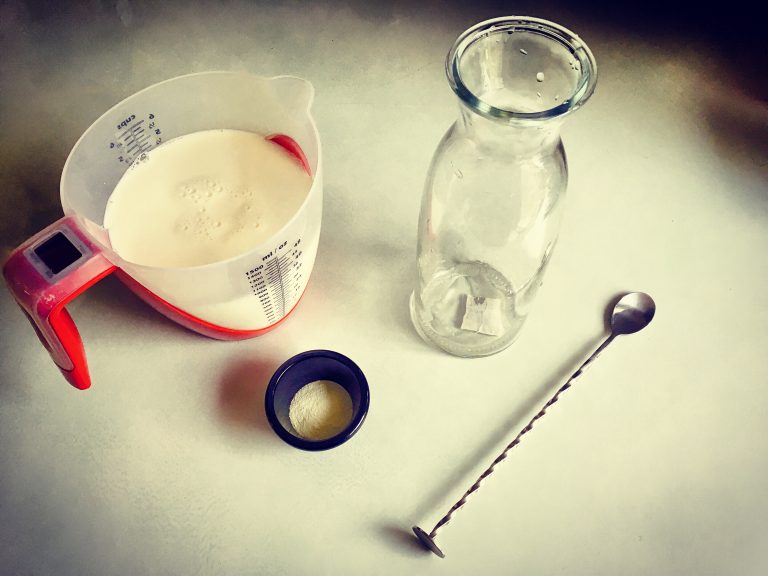
Our first kefir on this site, in 2016, didn’t use grains. We used a 5 g sachet of powdered kefir starter culture and 1 litre of milk. We stirred the powder into a splash of milk until there were no lumps, then added the rest of the milk in stages, stirring gently for about 20 minutes in total so the culture was spread through the whole jug rather than sitting at the bottom.

We covered the jug and left it at room temperature (22–24°C), out of the sun, for 24 hours. It came out lightly set, like a thin custard, and we chilled it for about 6 hours before drinking it within 4 days.

Powdered starters are an easy way to try kefir, but they contain fewer kinds of microbes than grains and usually can only be re-cultured a few times, which is why the recipe on this page uses grains.

A bottle and a glass of finished homemade kefir on a stone wall
The finished kefir, chilled (our 2016 batch, made with a powdered starter).
Kefir-making setup: a measuring jug of milk on a scale, a small dish of powdered kefir starter, a glass bottle and a long spoon
Our 2016 setup: milk, a powdered kefir starter and a glass bottle.
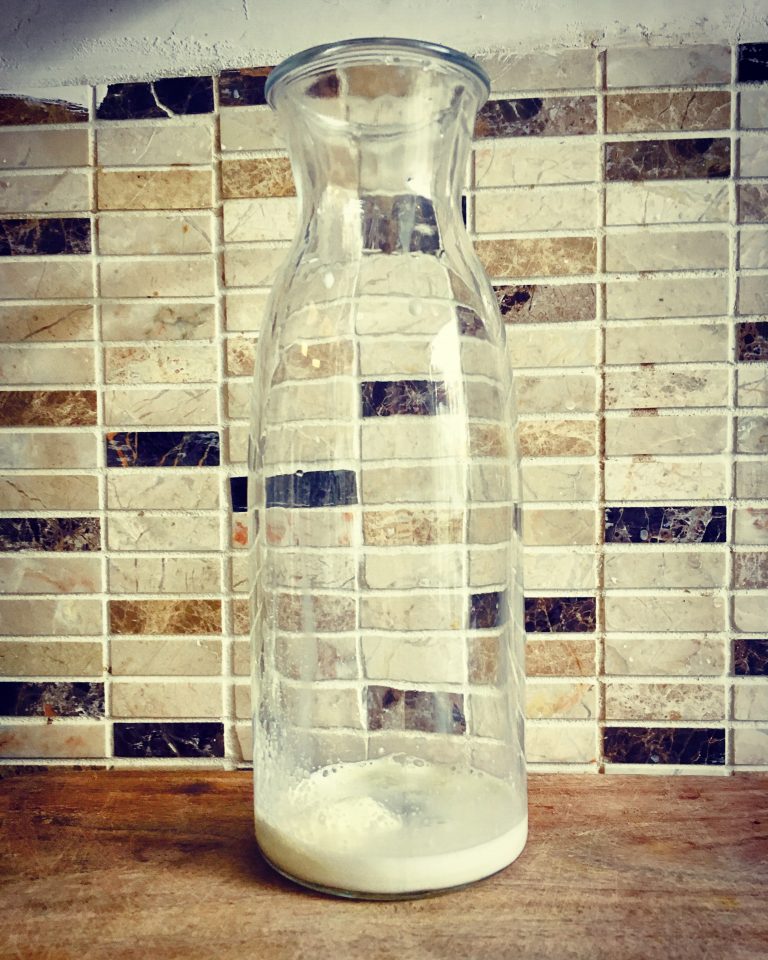
A glass bottle with the kefir starter mixed into a splash of milk at the bottom
The starter mixed into a splash of milk first.
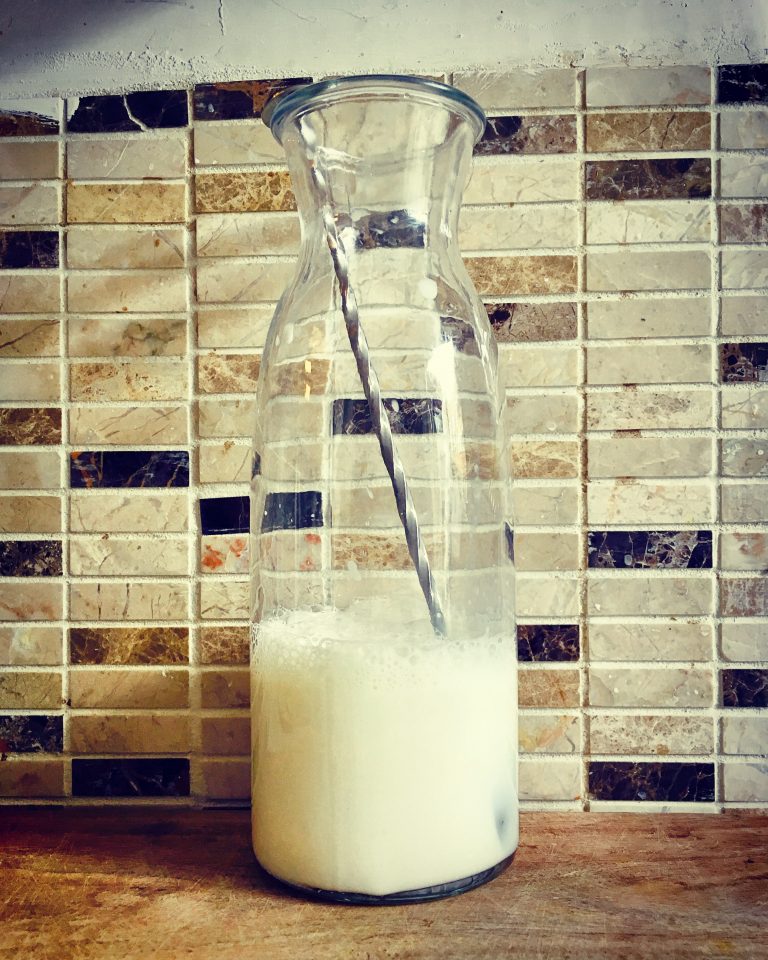
A glass bottle half full of milk with a long stirring spoon
Milk added in stages and stirred gently.
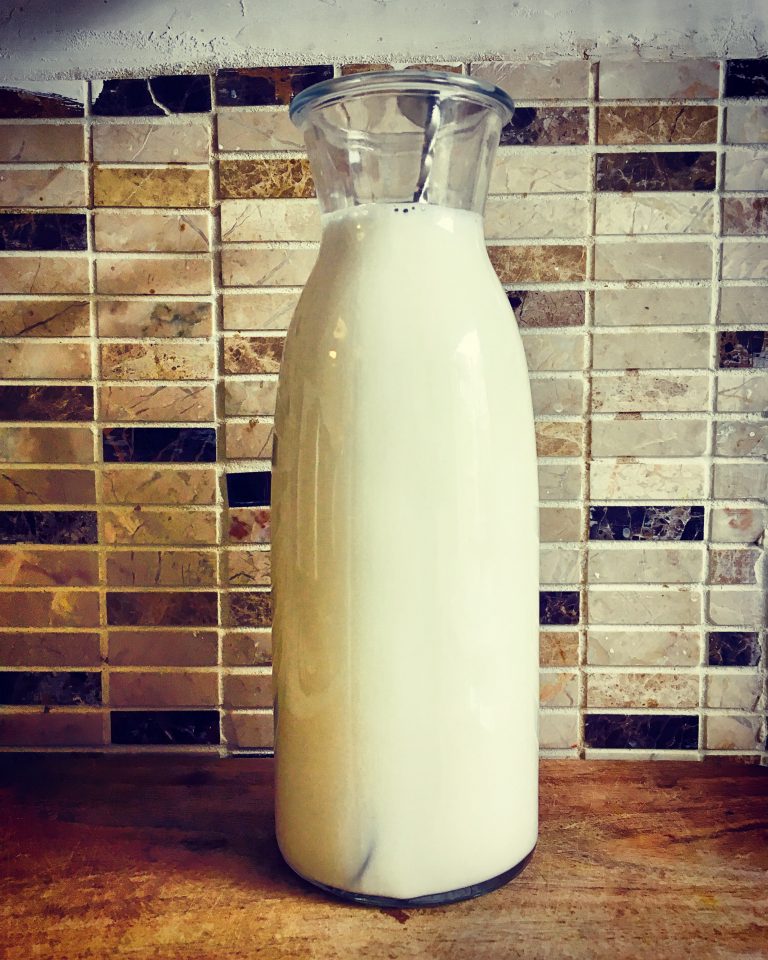
A glass bottle filled with milk and kefir culture before fermenting
Filled and ready to ferment for 24 hours.

Frequently asked questions

How many kefir grains do I need per litre of milk?

Studies use 2–10% grains by weight; about 20–50 g (1–3 tablespoons) per litre is a good start. More grains make it sour faster.

How long does milk kefir take to ferment?

About 24 hours at 20–25°C. Warmer rooms or more grains make it quicker; cooler rooms or fewer grains slow it down.

How do I know when kefir is ready?

It has thickened and smells clean and pleasantly sour. If you measure, finished kefir is around pH 4.2–4.6. Clear whey separating out means it went a bit long.

Can I use UHT or long-life milk?

Yes. Kefir made with UHT semi-skimmed milk under household conditions kept its expected composition in a 2021 study. Use pasteurized milk, not raw.

How fast do kefir grains grow?

About 6% of their weight a day at 20°C in one study, so roughly two weeks to double. Take some out when your kefir starts souring faster than you like.

Does homemade kefir contain alcohol?

A little: typically around 0.5%. More grains give more; in one study 5% grains gave about 1%.

Sources

  1. Alves E et al. (2021). Characterization of kefir produced in household conditions: physicochemical and nutritional profile, and storage stability. Foods 10(5):1057. Link
  2. Ströher JA et al. (2025). Consumer perception, sensory acceptance, and microbial characterization of artisanal milk kefir during shelf life. J Food Sci 90(12):e70739. Link
  3. Farag MA et al. (2020). The many faces of kefir fermented dairy products: quality characteristics, flavour chemistry, nutritional value, health benefits, and safety. Nutrients 12(2):346. Link
  4. Mudoor Sooresh M et al. (2025). Fermentation of kefir with traditional freeze-dried starter cultures successfully recreates fresh culture fermented kefir. Front Microbiol 16:1655390. Link
  5. Hertzler SR, Clancy SM (2003). Kefir improves lactose digestion and tolerance in adults with lactose maldigestion. J Am Diet Assoc 103(5):582–587. Link
  6. CDC. Raw milk. Link
Share: