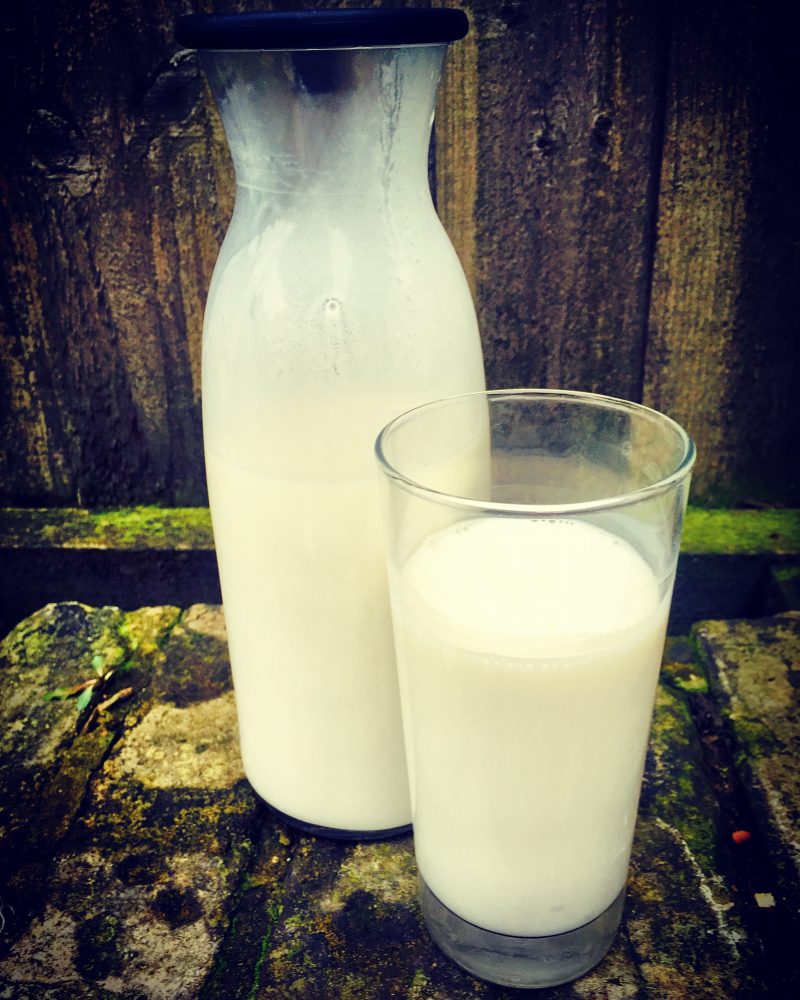
Kefir is a living food, and like all living things, its shelf life depends on the conditions you give it. Unlike pasteurised milk, which has a simple best-before date and a fairly predictable decay curve, kefir’s shelf life varies significantly depending on whether it’s store-bought or homemade, opened or sealed, and what type of kefir it is. The confusion is compounded by the fact that kefir should separate and look a bit odd — and distinguishing normal fermentation behaviour from genuine spoilage is a skill that takes a little experience.
This guide covers every scenario: store-bought kefir (opened and sealed), homemade kefir made with grains, kefir grains themselves, and what happens if you freeze kefir. It also provides clear, unambiguous signs of spoilage so you can confidently tell the difference between “this is fine” and “throw this out.”
How Long Does Store-Bought Kefir Last?
Unopened Store-Bought Kefir
The USDA-backed FoodKeeper guide says unopened kefir keeps for about 1 week after the date on the package when it stays in the fridge at or below 40°F (4°C). The printed date is mainly about quality: kefir keeps fermenting slowly in the fridge, so it gets tangier and fizzier as it ages.
Summary: unopened store-bought kefir = up to about 1 week past the date, refrigerated.
Opened Store-Bought Kefir
Here the official guidance and the makers disagree. FoodKeeper is cautious and says to use opened kefir within 1–2 days. Lifeway, the biggest US brand, says its kefir stays fresh from opening until the printed sell-by date. The practical answer: follow the label, keep the bottle sealed and cold, and check the smell and look every time you pour.
Practical rules for opened store-bought kefir:
- Always reseal tightly (or transfer to a lidded glass container if the original cap doesn’t seal well)
- Store it in the coldest part of your fridge (the back, not the door)
- Shake or stir before each use – separation is normal and not a sign of spoilage
- Pour directly or use a clean spoon – don’t contaminate it with other foods
- Check the smell and appearance each time you use it
Summary: opened store-bought kefir = follow the label; FoodKeeper’s cautious figure is 1–2 days.
How Long Does Homemade Kefir Last?
Homemade kefir made with grains isn’t covered by official shelf-life guidance, because every batch is different. It’s fermented at room temperature for 12–48 hours, during which the pH typically falls to around 4.2–4.6 (Rosa et al., 2017). Once strained and refrigerated it keeps fermenting slowly, becoming sourer and fizzier.
Many home fermenters drink their kefir within one to two weeks, and some prefer the flavor after a few days of rest in the fridge. Longer than that, it’s usually too sour to enjoy. Always judge by smell and appearance rather than by a fixed number of days.
Things that shorten homemade kefir’s life:
- Not straining properly (grain fragments keep fermenting it)
- Unclean equipment
- Very warm fermentation (above about 77°F / 25°C), which makes it sour and separated quickly
- Milk that was already close to its use-by date
- A fridge that isn’t consistently cold
Summary: homemade kefir = no official figure; most people use it within one to two weeks, judged by smell and look. For making it, see how to make milk kefir at home.
How Long Do Kefir Grains Last?
Kefir grains are living communities of bacteria and yeasts held together in a polysaccharide matrix called kefiran. Properly maintained, kefir grains can last indefinitely — there are documented grain cultures that have been passed down through families for over a century. The conditions for longevity are specific, however.
Kefir Grains in Active Use
Grains that are used regularly — fed fresh milk every 18–36 hours at room temperature — are in ideal conditions. They will grow, remain healthy, and can last indefinitely. The only threat is contamination (using unclean equipment, exposing to chlorinated water, or adding flavours or acidic juices directly to fermenting grain batches) or starvation (leaving without milk for more than 3–4 days at room temperature).
Refrigerating Kefir Grains (Short-Term Storage)
If you need a break from daily kefir making, place the grains in a jar with fresh whole milk (enough to submerge them), seal, and refrigerate. The cold significantly slows microbial activity. In this “hibernation” state, grains can remain viable for 2–4 weeks without feeding. Change the milk every 2 weeks to prevent starvation. When you want to restart, simply remove from fridge, pour off the old milk, and begin a normal fermentation cycle — expect the first 1–2 batches to taste slightly off as the grains “wake up.”
Freezing Kefir Grains (Long-Term Storage)
For storage beyond a month, freeze the grains. The process: rinse grains briefly with non-chlorinated water, pat dry gently with a paper towel, toss with 1–2 tbsp of powdered milk (acts as cryoprotectant), place in a zip-lock bag, and freeze. Frozen kefir grains can stay viable for several months. Thaw in the fridge overnight, then begin gradual reactivation with small milk additions over 2–4 days.
Note: freezing damages some microorganisms in the grain community. Your first few batches post-freeze may produce thinner, less complex kefir as the population re-establishes. This is normal — the grains recover within a week or two of regular use.
Dried Kefir Grains
Some commercial suppliers sell dehydrated kefir grains for shipping. Follow the supplier’s storage instructions; dried grains generally keep for months when stored cool and dry. Rehydration takes 3–7 days of gradual milk additions to return to full activity. The microbial community of dehydrated grains is often less diverse than fresh active grains due to die-off during the drying process.
Summary: active grains = indefinitely with regular feeding | resting in milk in the fridge = a few weeks | frozen or dried = several months.
Can You Freeze Kefir?
FoodKeeper advises against freezing kefir, mainly because of quality: thawed kefir separates and turns grainy and watery. Freezing doesn’t make it unsafe, and Lifeway notes it can be done – just not in the original bottle, which can split as the liquid expands.
If you do freeze it, use a freezer-safe container with some headspace, thaw it in the fridge, and blend it into smoothies, pancakes, overnight oats or marinades rather than drinking it straight. Some of the live cultures die during freezing, but not all of them.
Flavored Kefir vs Plain Kefir
Flavored kefirs carry the same kind of date as plain ones, and the same rules apply: follow the label, keep it cold and sealed, and check it each time. The added sugar and fruit give the cultures more to work on, so flavored kefir can turn sour or fizzy a little faster once opened.
Water Kefir vs Milk Kefir
Water kefir (made with water kefir grains, sugar water and often fruit) is a different drink with different microbes. Finished water kefir is best within a few days. In sealed bottles it keeps fermenting in the fridge and can build up a lot of pressure, so open bottles carefully and “burp” them if they’re very fizzy. See our water kefir guide.
5 Clear Signs Your Kefir Has Gone Bad
This is the most practically important section of this guide. Kefir normally looks and smells somewhat odd compared to fresh milk — that’s its nature. Here’s how to distinguish normal fermented character from genuine spoilage.
Sign 1: Pink, Orange, or Red Discoloration
This is the clearest spoilage sign and should never be ignored. Normal kefir is white to cream-coloured. Any pink, orange, red, or unusual tinting (beyond what would come from added fruit ingredients) indicates contamination with non-kefir organisms — often pink-pigmented bacteria or yeasts. Discard immediately.
Sign 2: Fuzzy Mold on the Surface
Any fuzzy, hairy, or powdery growth on the surface is mold and means the kefir is spoiled. Unlike hard cheeses where you can cut off mold, soft foods like kefir have mold roots (hyphae) that penetrate the entire product even when only visible on the surface. Discard the entire container. Wash the container with hot soapy water and rinse thoroughly before reusing.
Sign 3: Rancid or Putrid Smell
Normal kefir smells tangy, yeasty, slightly like bread, and distinctly sour. If your kefir smells rancid (like sour milk gone wrong, or reminiscent of dirty laundry, vomit, or a chemical sharpness), this indicates either lipid oxidation or the growth of undesirable bacteria producing off-metabolites. This is different from “very sour” — very sour is normal overfermented kefir; rancid is a genuinely unpleasant and wrong smell. Trust your nose.
Sign 4: Slimy Consistency (Different from Natural Ropiness)
Some kefir grains produce a naturally “ropy” or slightly viscous kefir — this is normal and comes from exopolysaccharide production by certain strains. However, if your kefir has developed a genuinely slimy, mucousy consistency that wasn’t there before (especially accompanied by other signs), this can indicate contamination. If in doubt, and the smell or colour is also off, discard.
Sign 5: Significant Bitterness or Chemical Off-Flavour
Overfermented kefir is very sour but not bitter or chemically flavoured. If your kefir tastes genuinely bitter, metallic, or has a flavour that doesn’t resemble any kind of sour dairy product, this indicates microbial contamination or oxidation. Discard.
What Is NOT a Sign of Spoilage
Before throwing away perfectly good kefir, check these common non-spoilage appearances:
- Separation into watery layer and thick curds: Completely normal. The liquid (whey) rises to the top and the kefir solids settle. Shake or stir vigorously to recombine. This is normal fermentation physics, not spoilage.
- Very sour or tart taste: Normal overfermentation, especially in homemade kefir. Still safe — just more acidic. Use in smoothies, baking, or with honey if it’s too sour to drink plain.
- Bubbles or slight fizziness: Normal, especially in homemade kefir where live yeast cultures produce CO2 during secondary fermentation. Some commercial kefirs are also naturally carbonated.
- Slight yellow tinge of whey: The whey in kefir (and all fermented dairy) has a natural pale yellow colour from riboflavin. This is not discoloration — it’s the vitamin B2 content being visible in the liquid phase.
- Thick, gelatinous texture (milk kefir): Kefir made from whole milk at cooler temperatures can set into an almost yogurt-like gel. This is normal, especially if made with particularly active grains or sheep/goat milk.
How to Store Kefir to Maximise Shelf Life
- Temperature: 2–4°C (35–40°F) is ideal. Most residential fridges run at 3–5°C. Store in the coldest zone (back of the main shelf, not the door, which fluctuates with opening).
- Container: Glass is preferred over plastic — it doesn’t absorb odours and maintains the flavour better long-term. Ensure lids seal properly.
- Minimise oxygen exposure: Use containers sized to the amount of kefir you have — a half-full large container has more air space than a full small one. Air accelerates oxidation and surface contamination.
- Cleanliness: Avoid “double-dipping” with spoons that have touched other foods. Pour directly into a glass or use a dedicated clean spoon.
- Keep away from strong-smelling foods: Kefir absorbs odours from its environment through its protein matrix. Don’t store next to cut onions, strong cheeses, or garlic in an open state.
Shelf Life Summary
| Type | Refrigerated | Frozen | Source |
|---|---|---|---|
| Store-bought kefir, unopened | About 1 week after the package date | Not recommended (texture) | FoodKeeper |
| Store-bought kefir, opened | 1–2 days (FoodKeeper); some makers say until the printed date | Not recommended (texture) | FoodKeeper, maker |
| Homemade milk kefir | No official figure; usually used within 1–2 weeks | Possible for cooking | Common practice |
| Water kefir | Best within a few days | Not recommended | Common practice |
| Kefir grains in milk (resting) | A few weeks, changing the milk regularly | Several months | Common practice |
How Kefir Compares with Other Fermented Dairy
Figures from the USDA-backed FoodKeeper guide:
| Product | Refrigerator | Freezer |
|---|---|---|
| Kefir | 1 week after the date; 1–2 days once opened | Do not freeze |
| Yogurt | 7–14 days | 1–2 months |
| Buttermilk | 1–2 weeks | 3 months |
| Sour cream | 7–21 days | Doesn’t freeze well |
Compare kefir and yogurt in more detail, or see how to store other fermented foods.
Can You Get Sick from Expired Kefir?
Kefir with signs of spoilage – mold, pink or orange color, or a rancid smell – should be thrown out without tasting. Kefir that is simply past its date and very sour, with none of those signs, is mostly a quality issue: its acidity makes it hostile to many harmful bacteria. It isn’t a guarantee, though – some strains of E. coli and Listeria can tolerate acidic conditions – so contaminated or badly stored kefir should never be “risked”.
People with weakened immune systems (for example during chemotherapy or on immunosuppressive drugs), pregnant people and the elderly should be more cautious: follow package dates strictly and choose pasteurized, store-bought kefir. For how storage and heat affect the live cultures, see what actually kills probiotics. If you have liver disease, see whether kefir can affect the liver.
Conclusion
Kefir’s live cultures and natural acidity make it more forgiving than fresh milk, but not indestructible. Follow the date on store-bought kefir (USDA FoodKeeper is cautious once it’s opened), use homemade kefir within a week or two, and let your senses have the final say. Your kefir grains, treated right, can outlast everything else in your kitchen by decades. The key skills are recognising normal fermentation appearance (separation, fizz, sourness) versus genuine spoilage (pink colour, mold, rancid smell), and storing everything properly sealed and continuously cold.
When in doubt, trust your nose before your calendar. Kefir that smells normally sour is almost certainly fine; kefir that smells rancid or chemical should be discarded regardless of what the date says.