How to Ferment Beets: Ruby Red Probiotic Beets (Easy Recipe)
If you love the earthy sweetness of beets and want to enhance their nutritional value while creating a tangy, probiotic-rich side dish, fermented beets are exactly what you need to try. Fermentation transforms ordinary beets into vibrant ruby gems bursting with beneficial bacteria, improved digestibility, and a complex sweet-and-sour flavor that elevates salads, grain bowls, and side dishes. Whether you’re new to fermentation or an experienced fermenter looking to expand your repertoire, this comprehensive guide will walk you through everything you need to know to successfully ferment beets at home.
Fermented beets have been enjoyed for centuries in Eastern European cuisine, where they’re used in traditional dishes like borscht and kvass. The fermentation process not only preserves beets for months but also enhances their nutritional profile by creating probiotics and increasing the bioavailability of certain nutrients. The result is a versatile condiment that’s simultaneously sweet, tart, earthy, and deeply satisfying—plus, the gorgeous ruby-red color makes any dish visually stunning.
Why Ferment Beets?
Fermenting beets offers multiple benefits beyond simple preservation. First and foremost, fermentation creates beneficial probiotics—the same type of healthy bacteria found in yogurt, kefir, and other fermented foods. These probiotics support gut health, aid digestion, and may boost immune function. The fermentation process essentially “pre-digests” the beets, breaking down sugars and making nutrients more bioavailable and easier for your body to absorb.
From a culinary perspective, fermentation adds complexity and depth to beets’ naturally sweet, earthy flavor. The lacto-fermentation process produces lactic acid, which gives fermented beets their characteristic tang—similar to pickles but with a milder, more nuanced flavor. This tangy-sweet combination pairs beautifully with rich foods like cheese, fatty fish, or roasted meats, cutting through richness with bright acidity.
Fermented beets are also incredibly versatile. Use them in salads, blend them into hummus for vibrant color and probiotic boost, chop them into grain bowls, serve them alongside roasted vegetables, juice them for probiotic beet juice, or use the brine as a starter for other ferments or as a tangy addition to salad dressings.
Nutritional Benefits
Beets are already nutritional powerhouses, packed with fiber, folate, manganese, potassium, and iron. They’re particularly rich in betalains, powerful antioxidants responsible for beets’ deep red color that have anti-inflammatory and detoxification properties. Beets also contain nitrates that the body converts to nitric oxide, which may support cardiovascular health by improving blood flow and reducing blood pressure.
Fermentation enhances these inherent benefits. The process increases vitamin content (particularly B vitamins), creates enzymes that aid digestion, produces probiotics that support gut health, and reduces anti-nutrients that can interfere with mineral absorption. Some studies suggest fermented vegetables may have enhanced antioxidant activity compared to their raw counterparts.
What You’ll Need: Equipment and Ingredients
Essential Equipment
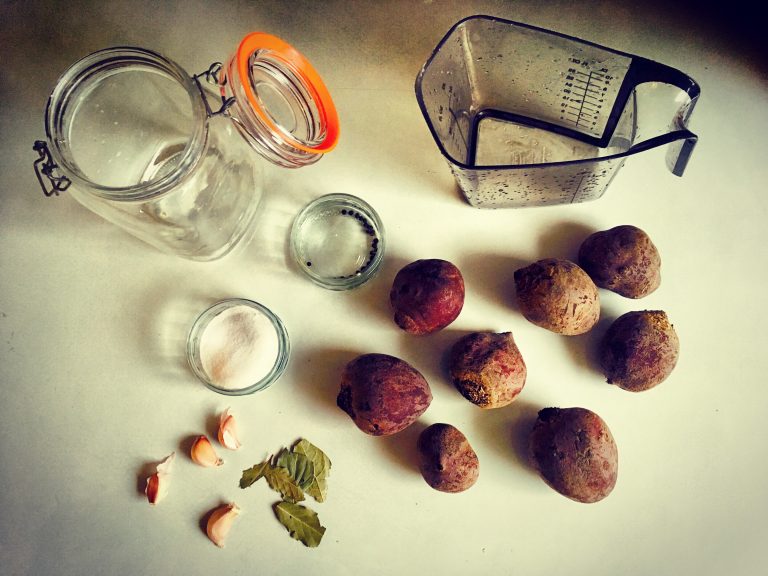
- Wide-mouth quart jar (32 oz) – Glass mason jars work perfectly. A wide mouth makes it easier to pack beets and retrieve them later.
- Fermentation weight or cabbage leaf – Keeps beets submerged under brine, preventing mold. You can use glass weights, a small jar filled with water, or simply a clean cabbage leaf.
- Cloth or coffee filter – Covers the jar to allow gases to escape while keeping out fruit flies and debris. Secure with a rubber band.
- Knife and cutting board – For preparing beets.
- Measuring cups and spoons – For accurate brine preparation.
- Large bowl (optional) – Helpful for tossing beets with salt if using the dry salt method.
Optional But Helpful
- Airlock fermentation lid – Creates anaerobic environment and prevents mold; not essential but convenient
- Vegetable peeler – Makes peeling beets easier
- Mandoline slicer – Creates uniform slices for even fermentation
- pH strips – Allows you to monitor acidity (finished fermented beets should be pH 3.5-4.0)
- Gloves – Beets stain hands; gloves keep your hands clean
Ingredients for Basic Fermented Beets
For a 1-quart jar:
- 3-4 medium beets (about 1-1.5 pounds) – Choose firm, fresh beets without soft spots. Both red and golden beets work, but red creates more vibrant color.
- 2 cups filtered water – Chlorinated tap water can inhibit fermentation; use filtered, spring, or dechlorinated water.
- 1-1.5 tablespoons sea salt or kosher salt – For a 2-3% brine. Avoid iodized salt which can interfere with fermentation.
Optional Flavorings and Aromatics
- 2-3 cloves garlic – Adds savory depth
- 1-inch piece fresh ginger, sliced – Provides warmth and spice
- 1 tablespoon caraway seeds – Traditional Eastern European pairing
- 1 teaspoon black peppercorns – Adds subtle heat
- 1 bay leaf – Contributes herbal notes
- 1 teaspoon coriander seeds – Sweet, citrusy flavor
- Fresh dill or thyme sprigs – Herbal complexity
- 1 small onion, sliced – Ferments alongside beets, adds flavor
- Horseradish root slices – Keeps beets crisp and adds spicy kick
Step-by-Step Instructions for Fermenting Beets
Preparation Method
You can ferment beets using either raw or cooked beets. Each method has advantages:
Raw Beet Fermentation (Recommended for Beginners): Raw beets maintain more nutrients and create a crisper final texture. They require longer fermentation time (7-14 days) but result in maximum probiotic content. The flavor is bright, earthy, and tangy.
Cooked Beet Fermentation (Faster): Lightly steaming or roasting beets before fermenting speeds up the process (3-5 days) and creates a softer, more tender texture. Some nutrients are lost in cooking, but the fermentation still produces probiotics. The flavor is sweeter and more mellow.
This guide focuses on raw beet fermentation for maximum health benefits and traditional flavor.
Step 1: Prepare the Beets
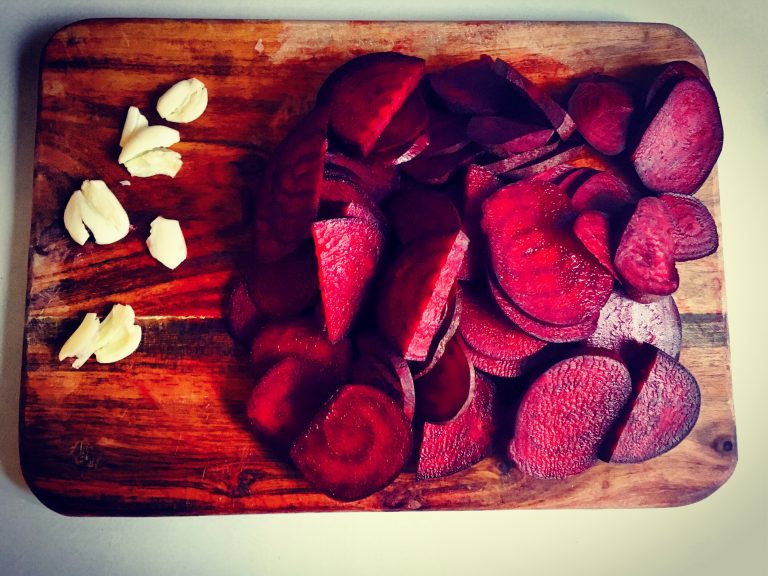
Thoroughly scrub beets under running water to remove all dirt. Beet skins are edible and contain nutrients, so you can leave them on if desired, or peel them for a cleaner appearance—the choice is yours. If your beets have greens attached, remove them (save for another use—beet greens are delicious sautéed!).
Trim off the root end and stem end of each beet. Cut beets into your desired shape and size. Options include:
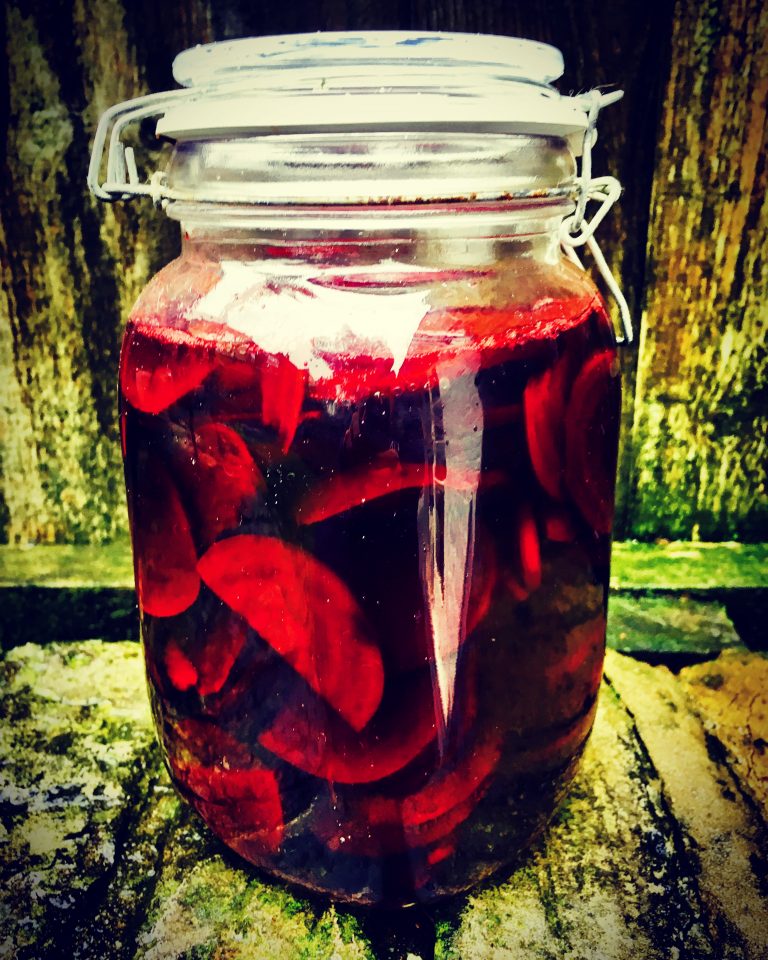
- Thin slices (⅛-¼ inch): Ferment quickly and are ready to eat sooner; perfect for salads
- Matchsticks or julienne: Beautiful presentation, ferment moderately fast
- Cubes (½-inch): Versatile size, good for grain bowls and side dishes
- Quarters or wedges: Rustic look, take longest to ferment but maintain firmness
Important: Make pieces uniform in size so they ferment at the same rate. Smaller pieces ferment faster than larger pieces.
Note: Beets stain! Work on a surface you don’t mind staining, or use a cutting board designated for messy tasks. Wear gloves if you want to avoid pink hands (beet stains fade from skin in a day or two but can be stubborn on cutting boards and plastic containers).
Step 2: Prepare the Brine
For lacto-fermentation, you need a saltwater brine. The salt creates an environment where beneficial lactobacillus bacteria thrive while inhibiting harmful bacteria and mold.
Standard 2% Brine (Mild, Good for Beginners):
Mix 1 tablespoon sea salt with 2 cups filtered water. Stir until salt is completely dissolved. This creates a 2% brine, which is mild and allows the beet flavor to shine through.
3% Brine (Stronger, More Preservation):
Mix 1.5 tablespoons sea salt with 2 cups filtered water. A slightly stronger brine provides more preservation power and works well in warmer climates or if you plan to store the fermented beets for extended periods.
Pro Tip: For precise measurements, use weight rather than volume. A 2% brine means 2% salt by weight of water (20g salt per 1000g water). A 3% brine is 30g salt per 1000g water.
Step 3: Pack the Jar
Place your prepared beet pieces into the clean quart jar. If you’re adding any aromatics (garlic, ginger, spices), layer them throughout the beets for even flavor distribution. Pack the beets relatively firmly but not so tightly that brine can’t circulate—leave a little room for the beets to move.
As you pack, you can pound or press down gently with a clean spoon or fermentation tamper. This isn’t as crucial as with cabbage (which releases its own liquid when pounded), but it helps fit more beets in the jar.
Step 4: Add the Brine
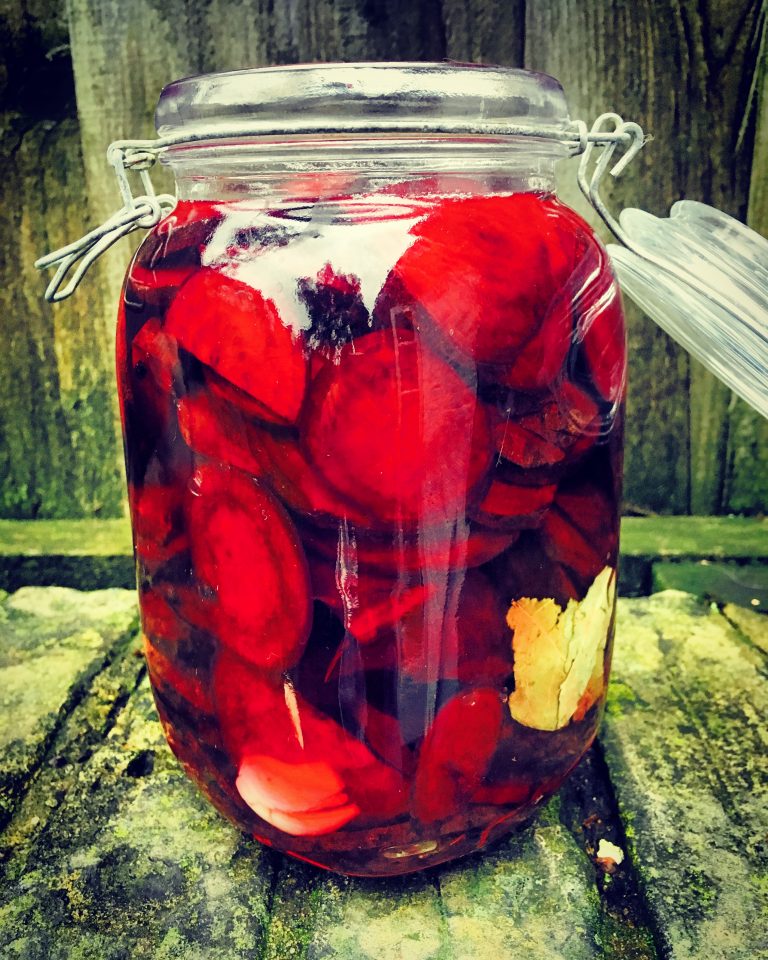
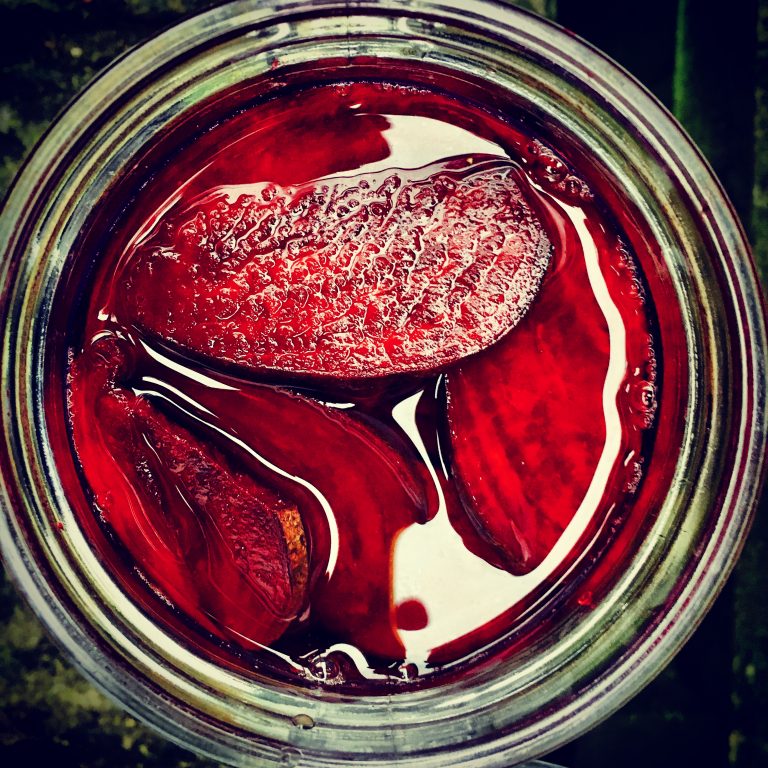
Pour your prepared brine over the beets, completely submerging them. The brine should cover the beets by at least ½ inch. Leave about 1-2 inches of headspace at the top of the jar to allow for expansion during fermentation—the fermentation process produces gases and can cause overflow if the jar is too full.
If you run out of brine, simply mix more using the same ratio (1 or 1.5 tablespoons salt per 2 cups water).
Step 5: Weight Down the Beets
Beets (and all vegetables) must remain submerged under brine during fermentation. Exposure to air can cause mold and spoilage. Use one of these methods to keep beets submerged:
- Glass fermentation weight: Place directly on top of beets, under the brine
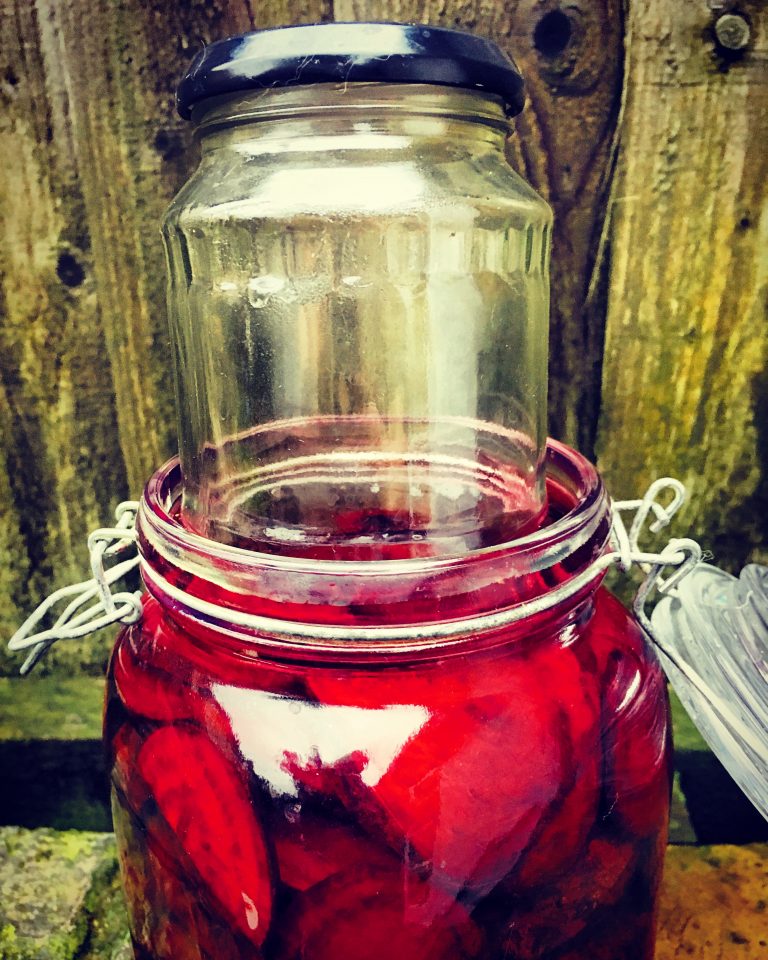
- Small glass jar: Fill a smaller jar with water and place it inside your fermentation jar on top of the beets
- Cabbage leaf: Tuck a clean outer cabbage leaf over the beets, then add a weight on top of it
- Ziplock bag: Fill a bag with brine (not plain water, in case it leaks) and place on top of beets
Step 6: Cover the Jar
Cover the jar with a breathable cloth (coffee filter, cheesecloth, or thin kitchen towel) secured with a rubber band. This allows fermentation gases to escape while keeping out fruit flies, dust, and debris.
Alternatively, use an airlock fermentation lid if you have one. Airlocks maintain an anaerobic environment and reduce the risk of mold, but they’re not necessary—traditional fermentation with a cloth cover works beautifully.
Step 7: Ferment at Room Temperature
Place the jar in a location that’s:
- Room temperature (68-75°F / 20-24°C is ideal)
- Out of direct sunlight
- On a plate or tray (to catch any overflow that might occur during active fermentation)
- Away from other ferments (to prevent cross-contamination)
Allow the beets to ferment for 7-14 days. The exact time depends on:
- Temperature: Warmer temperatures speed fermentation; cooler temperatures slow it down
- Beet size: Smaller pieces ferment faster than larger chunks
- Personal taste preference: Shorter fermentation = milder tang; longer fermentation = more sour
During the first 3-4 days, you’ll notice increased activity—the brine may become cloudy (this is normal!), you might see bubbles forming, and some liquid may seep out of the jar. This is active fermentation and exactly what you want to see.
Step 8: Check and Taste
Check your ferment daily. Look for:
- Cloudiness in brine: Normal—this is lactic acid bacteria at work
- Bubbles: Normal—these are CO2 bubbles from fermentation
- White film on surface: Likely kahm yeast (harmless but can affect flavor); skim it off
- Mold (fuzzy, colored patches): Not normal—discard the entire batch if you see true mold
After 5-7 days, start tasting the beets. Insert a clean fork or spoon under the weight, retrieve a small piece, and taste. The beets should taste tangy and pleasantly sour, with the beet’s natural sweetness still present but balanced by acidity.
Ferment until the flavor reaches your preference. Some people prefer mild tang (7-8 days), while others enjoy strong sourness (12-14 days). There’s no single “right” endpoint—it’s entirely based on your taste.
Step 9: Store in Refrigerator
Once the fermented beets reach your desired flavor, remove the weight and cloth cover, seal the jar with a regular lid, and transfer to the refrigerator. Cold storage dramatically slows fermentation, preserving the flavor and texture you’ve achieved.
Fermented beets will keep in the refrigerator for 4-6 months, sometimes longer. As long as they’re submerged in brine and show no signs of mold or off odors, they’re safe to eat. The flavor will continue developing slowly even in the refrigerator, becoming more sour over time.
Fermented Beet Variations and Flavor Combinations
Golden Beet Ferment
Use golden or yellow beets instead of red for a milder, slightly sweeter flavor and gorgeous golden color. Golden beets don’t stain as aggressively as red beets, making them easier to work with. The fermentation process is identical.
Mixed Root Vegetable Ferment
Combine beets with other root vegetables for complex flavor and visual appeal. Try beets with carrots, turnips, rutabaga, or radishes. Use about 50% beets and 50% other vegetables, prepared the same way. The different vegetables ferment at similar rates when cut to similar sizes.
Beet and Apple Ferment
Add peeled, sliced apple (about 1 medium apple per quart jar) to your beets for a sweeter, fruitier ferment. The apples ferment beautifully and complement the earthy beets. This combination is particularly delicious in salads.
Spiced Eastern European Beets
For traditional Eastern European flavor, add 2 cloves garlic, 1 tablespoon caraway seeds, 1 teaspoon black peppercorns, and 1 bay leaf. This creates a deeply savory ferment perfect for serving with hearty dishes.
Ginger Turmeric Beets
Add 1-inch piece fresh ginger (sliced) and 1-inch piece fresh turmeric (sliced) for an anti-inflammatory powerhouse. The warm, spicy notes complement beets beautifully. Note that turmeric will deepen the color to a more orange-red.
Beet Kvass (Fermented Beet Drink)
Use whole or large chunks of beets with extra brine to create beet kvass, a traditional Eastern European probiotic drink. Use 2-3 whole beets cut into large chunks, 1 tablespoon sea salt, and fill a half-gallon jar with filtered water. Ferment 3-5 days, then strain and drink the brine. The flavor is earthy and slightly salty—an acquired taste but valued for its probiotic and liver-supporting properties.
Troubleshooting Common Fermentation Issues
My Beets Are Floating Above the Brine
Beets have a tendency to float, especially when cut into smaller pieces. This is why a weight is essential. If beets float above the brine, they’re exposed to oxygen and can develop mold. Solutions: ensure your weight is heavy enough to keep beets submerged, add more brine to increase the depth of liquid over the beets, use a cabbage leaf tucked under the weight to trap floating pieces, or check and push down beets daily if not using a weight.
White Film on the Surface (Kahm Yeast)
A thin white or cream-colored film on the brine surface is usually kahm yeast—a common fermentation byproduct. It’s harmless but can make ferments taste yeasty or off. Simply skim it off with a clean spoon and continue fermenting. To prevent kahm yeast: ensure beets stay submerged, maintain proper salt concentration (don’t under-salt), keep fermentation temperature moderate (kahm loves warmth), and consider using an airlock lid for future batches.
Mold on the Surface (Fuzzy, Colored Growth)
True mold appears as fuzzy patches in colors like white, blue, green, or black. Unlike kahm yeast which is smooth, mold is three-dimensional and fuzzy. If you see mold, unfortunately the entire batch must be discarded. Mold produces mycotoxins that can permeate the entire ferment. Prevention strategies: use sufficient salt (at least 2% brine), ensure vegetables stay completely submerged, use clean equipment, maintain room temperature (not too warm), use filtered or dechlorinated water, and add enough starter liquid or use starter culture if mold is a recurring problem.
Fermentation is Very Slow or Nothing is Happening
If after 3-4 days you see no cloudiness, bubbles, or tangy smell, fermentation may not have started properly. Common causes and fixes: temperature too cool (move to warmer location, 68-75°F is ideal), chlorinated water killed beneficial bacteria (use filtered or dechlorinated water), too much salt inhibited fermentation (ensure you’re using 2-3% brine, not more), or not enough beneficial bacteria present (add a splash of brine from a successful ferment as a starter).
Beets Taste Too Salty
If finished fermented beets taste excessively salty, you may have used too much salt in the brine. Fixes for the current batch: rinse the beets before eating (you’ll lose some probiotics but reduce saltiness), dilute by adding unsalted fermented vegetables, or use in recipes where saltiness is an asset (like mixing into grain bowls where they’ll be diluted by other ingredients). For future batches, use precise measurements (2% brine = 1 tablespoon salt per 2 cups water) and consider using kitchen scale for accuracy.
Beets Are Too Soft or Mushy
Over-fermentation or too-warm temperatures can make beets mushy. While they’re still safe to eat, the texture may be less appealing. Prevention strategies: ferment at cooler temperatures (65-72°F rather than 75-80°F), add tannins which help maintain crispness (grape leaves, oak leaves, or horseradish root), move to refrigerator sooner once desired tang is reached, or cut beets into larger chunks which maintain texture better than small pieces.
Using Fermented Beets
Fermented beets are incredibly versatile. Here are some delicious ways to use them:
Simple Serving Ideas
- Straight from the jar – Enjoy as a probiotic-rich side dish or snack
- In salads – Add to green salads, grain salads, or potato salad for color and tang
- On cheese boards – The acidity cuts through rich cheeses beautifully
- Grain bowls – Top quinoa, rice, or farro bowls with fermented beets
- Sandwiches and wraps – Add to veggie sandwiches, hummus wraps, or deli sandwiches
- Topping for roasted vegetables – The tang brightens roasted winter vegetables
Recipe Ideas
Fermented Beet Hummus: Blend fermented beets with chickpeas, tahini, lemon juice, and garlic for vibrant pink probiotic hummus.
Probiotic Beet Salad: Toss fermented beets with arugula, goat cheese, walnuts, and a simple vinaigrette (the beets provide acidity, so reduce vinegar in the dressing).
Fermented Beet Soup: Blend fermented beets with their brine, vegetable broth, and cooked potatoes for a probiotic-rich cold soup (similar to borscht). Top with sour cream and dill.
Beet and Avocado Toast: Mash avocado on toast, top with sliced fermented beets, and sprinkle with sea salt and seeds.
Fermented Beet Juice: Blend fermented beets with their brine and fresh apple juice for a probiotic morning drink.
Don’t Forget the Brine!
The fermentation brine is packed with probiotics and shouldn’t be wasted. Use it to: drink in small amounts (2-4 ounces) as a probiotic tonic, use as starter culture for your next ferment, add to salad dressings for probiotic boost and tangy flavor, use in marinades for meats or vegetables, or add to smoothies for a probiotic kick (start with 1-2 tablespoons).
Frequently Asked Questions
Do I need to peel beets before fermenting?
No, peeling is optional. Beet skins are edible, nutritious, and ferment just fine. Many fermenters leave skins on for maximum nutrition and rustic appearance. If you prefer a cleaner look or are concerned about dirt, peel them. The choice is entirely based on preference.
Can I ferment cooked beets?
Yes! Lightly cooked beets can be fermented, though they’ll be softer and ferment faster (3-5 days instead of 7-14). Steam or roast beets until just tender, let them cool completely, then follow the same fermentation process. Keep in mind that cooking reduces some nutrients and kills any naturally present beneficial bacteria, so the probiotic content will come entirely from the fermentation process rather than the beets themselves.
How long do fermented beets last?
When stored properly in the refrigerator, completely submerged in brine, fermented beets keep for 4-6 months, sometimes up to a year. As long as there’s no mold, off odors, or signs of spoilage, they’re safe to eat. The flavor continues to develop over time, becoming more sour. Always use a clean utensil when removing beets from the jar to avoid introducing contaminants.
Are fermented beets the same as pickled beets?
No, they’re fundamentally different. Pickled beets are preserved in vinegar (with or without heat), which creates the sour flavor quickly but doesn’t produce probiotics. Fermented beets are preserved through lacto-fermentation (salt brine), which takes longer but creates beneficial bacteria. Fermented beets have probiotics; pickled beets do not. Fermented beets have a more complex, nuanced flavor; pickled beets have straightforward vinegar sourness.
Why is my fermentation brine cloudy?
Cloudiness is completely normal and actually a good sign! The cloudiness is caused by beneficial lactic acid bacteria proliferating in the brine. This is exactly what you want to see during fermentation. The brine may also have a slight effervescence or bubbles, which is also normal. Don’t discard cloudy brine—it’s full of probiotics.
Can I reuse fermentation brine?
Yes! Leftover fermentation brine makes an excellent starter for your next fermentation batch. Adding 2-4 tablespoons of brine from a successful ferment to a new batch helps jumpstart fermentation and can prevent mold by quickly establishing an acidic environment. You can also drink the brine (2-4 ounces) as a probiotic tonic, though the flavor is quite strong and salty.
What if I don’t have sea salt—can I use iodized table salt?
It’s best to avoid iodized salt. The iodine and anti-caking agents in table salt can interfere with fermentation and may prevent beneficial bacteria from thriving. Use sea salt, kosher salt, Himalayan pink salt, or any pure salt without additives. These salts work perfectly for fermentation and allow beneficial bacteria to flourish.
Is it normal for fermented beets to smell strong?
Yes, fermented beets have a distinct aroma—earthy, tangy, and slightly pungent, similar to sauerkraut. This is the smell of healthy lacto-fermentation. The smell should be sour but not rotten or foul. Trust your nose: healthy fermentation smells tangy and vegetable-like; spoilage smells rotten, putrid, or extremely unpleasant. If the smell makes you recoil, something may be wrong.
Final Thoughts on Fermenting Beets
Fermenting beets is a simple, rewarding fermentation project that yields gorgeous, probiotic-rich results. Once you’ve experienced the complex sweet-tart flavor and vibrant color of homemade fermented beets, store-bought pickled versions will seem one-dimensional by comparison. The process is forgiving, requires minimal equipment, and opens up endless possibilities for flavor variations and culinary creativity.
Remember that fermentation is both science and art. While there are guidelines to follow (proper salt concentration, keeping vegetables submerged, appropriate fermentation time), there’s also room for experimentation and personal preference. Your fermented beets might look or taste slightly different from batch to batch depending on temperature, beet variety, and fermentation time—and that’s perfectly fine. Embrace the natural variation that comes with working with living foods.
Start with the basic recipe, master the fundamentals, and then experiment with different aromatics, spices, and vegetable combinations. Keep notes on what works well for your taste and climate. Most importantly, trust your senses throughout the process—sight, smell, and taste are your best guides to fermentation success.
Whether you’re eating them straight from the jar, adding them to salads, blending them into hummus, or using the probiotic-rich brine in creative ways, fermented beets are a nutritious, delicious addition to your fermented foods repertoire. Welcome to the beautiful, ruby-red world of fermented beets!
Food Safety Note
Proper fermentation techniques are essential for food safety. Always use clean equipment and sanitized jars, follow recommended salt ratios (2-3% brine) for safe fermentation, keep vegetables completely submerged under brine at all times, check for signs of mold (fuzzy, colored patches) and discard entire batch if found, store fermented foods properly in refrigeration after reaching desired fermentation, and discard any ferments that smell putrid, look moldy, or seem unsafe.
When in doubt, throw it out. If you have concerns about fermentation safety, consult food safety resources, experienced fermenters, or local health departments.
Nutritional Disclaimer
The information provided is for educational purposes only. We are not nutritionists or medical professionals. Always consult with a healthcare provider before making significant dietary changes, especially if you have health conditions or are taking medications.
Individual results may vary. Probiotic benefits depend on many factors including overall diet, existing gut health, and individual microbiome composition. If you’re on blood thinners or have kidney issues, consult your doctor before consuming large amounts of beets, as they’re high in vitamin K and oxalates.