How to make fermented cucumbers with this classic lacto-fermented dill pickle recipe. Probiotic-rich, crunchy pickles ready in 3-7 days.
At a glance
To make fermented dill pickles, trim the blossom ends of fresh pickling cucumbers, pack them in a jar with dill, garlic and spices, and cover with salt brine (NCHFP: ½ cup salt, ¼ cup vinegar and 8 cups water per gallon). Keep them submerged at 70–75°F (21–24°C) for 3–4 weeks for full-sours, or taste from day 3 and refrigerate early for half-sours.
Full-sours take about 3–4 weeks at 70–75°F; half-sours about 3–7 days.
Trim a 1/16-inch slice off the blossom end to help keep pickles crisp (NCHFP).
Above 80°F (27°C), pickles turn soft while fermenting.
Fully fermented pickles keep about 4–6 months refrigerated (NCHFP).
Discard pickles that turn soft, slimy or smell disagreeable.
Ferment profile
Fermentation
Lactic acid
Main microbes
Naturally occurring lactic acid bacteria
Live cultures
Yes
Alcohol
None / trace
Recipe: Fermented Dill Pickles
Makes
1-quart (1-litre) jar
Hands-on
20 min
Fermentation
3–4 weeks at 70–75°F (21–24°C) for full-sours; 3–7 days for half-sours
Salt
NCHFP ratio: ½ cup salt per 8 cups water (scaled: 2 tbsp per 2 cups)
Temperature
70–75°F (21–24°C); never above 80°F
Difficulty
Easy
Equipment
1-quart (1-litre) wide-mouth jar
Fermentation weight or brine-filled bag
Loose lid, airlock lid, or cloth
Plate to catch overflow
Ingredients
450 g (1 lb) pickling cucumbers, about 4 inches (10 cm) (very fresh)
2 cups (475 ml) water
2 tbsp pickling or canning salt (non-iodized)
1 tbsp vinegar (5% acidity) (as in the NCHFP recipe)
1–2 heads or 1½ tsp seed dill
2 garlic cloves (optional)
1 dried red pepper (optional)
½ tsp whole mixed pickling spices (optional)
Method
Wash the cucumbers. Cut a 1/16-inch slice off the blossom end and discard it; leave ¼ inch of stem attached.
Put half the dill and spices in the bottom of the jar, add the cucumbers, then the rest of the dill and spices.
Dissolve the salt in the vinegar and water and pour it over the cucumbers so they're covered.
Add a weight to keep them submerged and cover loosely.
Keep at 70–75°F (21–24°C). Check several times a week and promptly remove any surface scum.
For half-sours, taste from day 3 and refrigerate when you like them. For full-sours, ferment about 3–4 weeks, until olive green throughout.
Refrigerate. Discard any pickles that turn soft or slimy or smell disagreeable.
Fermented dill pickles are cucumbers soured by lactic acid bacteria in a salt brine – the original pickle, before vinegar and canning took over. They’re tangy, garlicky and, done right, still crunchy. You can stop early for bright green half-sours after about a week, or go the full 3–4 weeks for olive-green full-sours, as in the tested recipe from the US National Center for Home Food Preservation.
Half-Sour or Full-Sour?
Half-sour
Full-sour
Time
About 3–7 days
3–4 weeks at 70–75°F (21–24°C)
Color
Still bright green
Olive green throughout
Flavor
Mildly tangy, fresh-tasting
Fully sour
Storage
Refrigerate and eat within a few weeks
4–6 months refrigerated (NCHFP)
The recipe card follows the NCHFP proportions, scaled to a 1-quart jar. For half-sours, use the same jar, taste from day 3 and refrigerate as soon as you like them. Full-sours can be canned with NCHFP’s tested times; half-sours have none (see canning fermented pickles).
Choosing Cucumbers
Best: small, firm pickling cucumbers (Kirby type), about 4 inches (10 cm) long, as fresh as possible.
Works: Persian cucumbers.
Softer results: long salad or English cucumbers – they work (our 2016 batch used them, cut into spears), but they’re wetter and soften sooner.
Avoid: yellowing, soft or large-seeded cucumbers, and waxed supermarket cucumbers.
How to Keep Pickles Crunchy
Trim the blossom end. NCHFP says to cut a 1/16-inch slice off the blossom end (opposite the stem), which can contain enzymes that soften pickles (NCHFP).
Keep it below 80°F (27°C). Above that, pickles turn soft during fermentation (NCHFP).
Use fresh cucumbers and don’t cut the salt.
Add a tannin-rich leaf – grape, oak or horseradish – a traditional trick for crunch.
Troubleshooting
White film or scum: NCHFP advises checking the container several times a week and promptly removing surface scum. Keep the cucumbers submerged.
Fuzzy or colored mold, slime, or a disagreeable smell: discard the pickles (NCHFP).
Soft or hollow pickles: old or overripe cucumbers, an untrimmed blossom end, low salt or too much heat (NCHFP troubleshooting).
Cloudy brine: normal – it’s the bacteria and yeasts at work.
No bubbles after 3 days: probably too cool; move the jar somewhere warmer (65–75°F).
Flavor Variations
Garlic lover’s: double the garlic.
Spicy: a sliced jalapeño or a couple of dried chilies.
Spiced: add caraway and mustard seeds, as in our 2016 batch.
Ginger and turmeric: slices of each in place of some of the dill.
Fermented vs vinegar pickles: vinegar pickles are soured by added vinegar and usually heat-processed, so they contain no live bacteria; fermented pickles are soured by bacteria and, unless heated, still contain them. See fermented vs pickled. For a watery vegetable done the same way, see fermented zucchini.
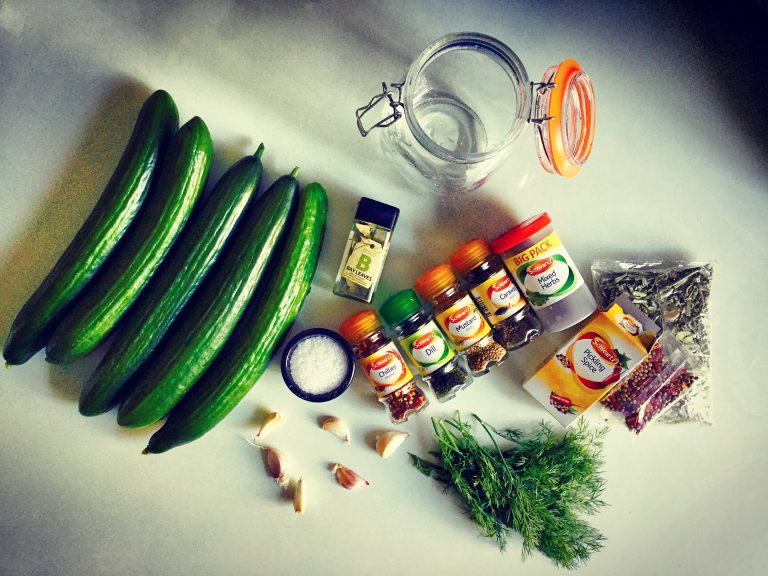
Our original fermented cucumber recipe, first published here in 2016, used 3–5 long cucumbers cut into spears, with 6 garlic cloves, a handful of fresh dill, 3 bay leaves and plenty of spice: a sachet of pickling spices plus a tablespoon each of dried mixed herbs, caraway seeds, mustard seeds, dried dill and chilies, with 2 tablespoons of salt.
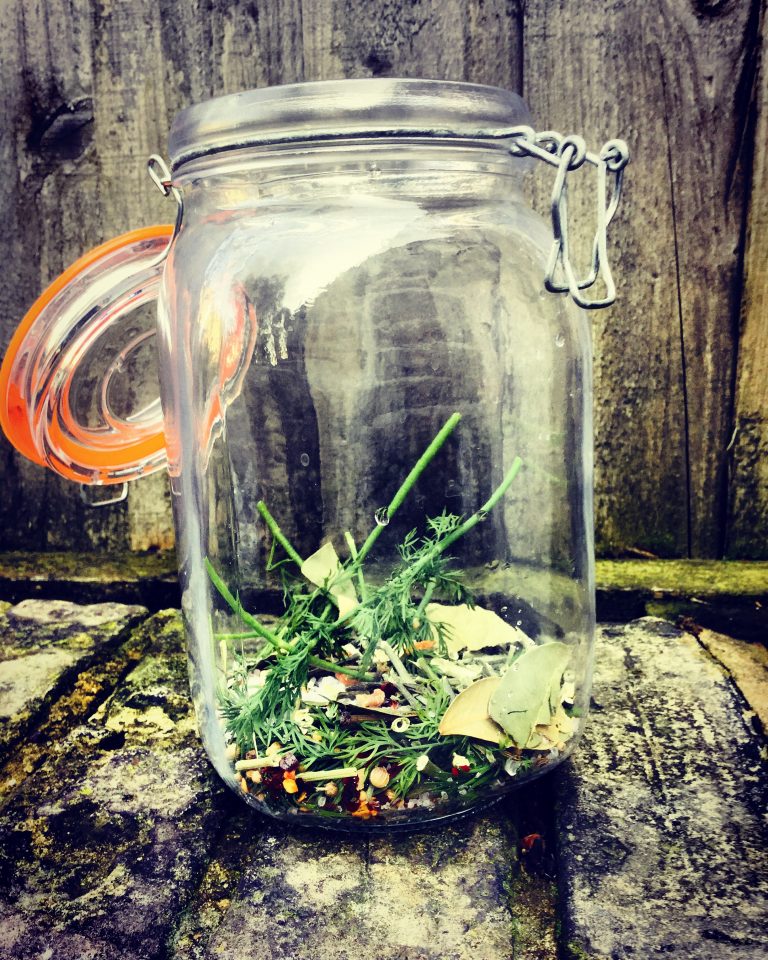
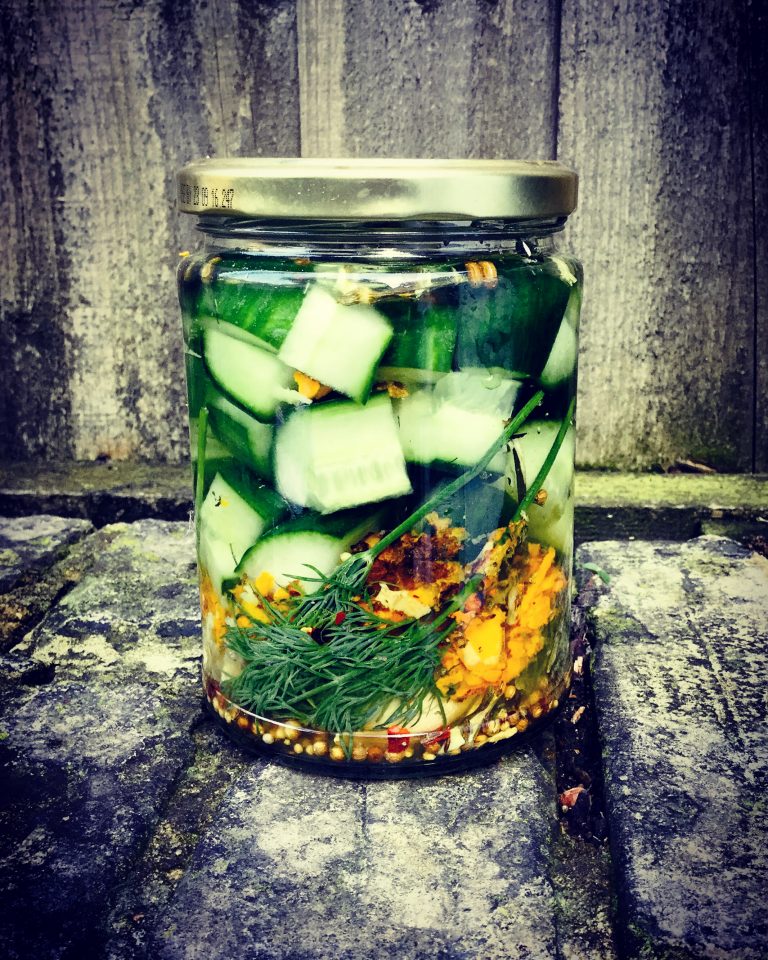
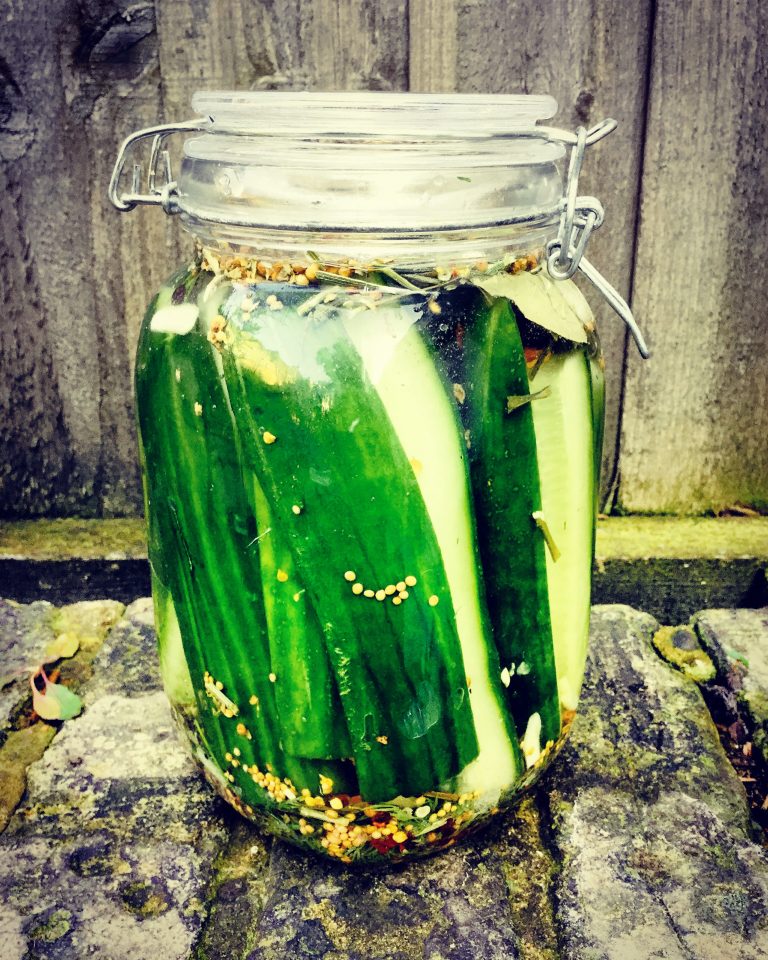
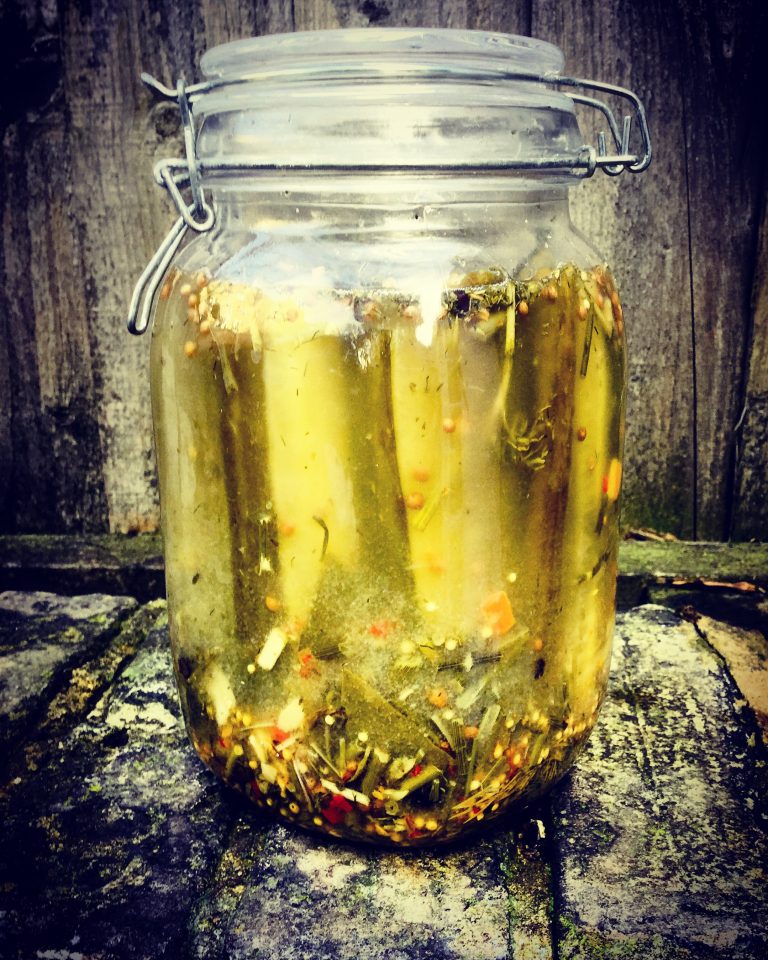
We put half the garlic, dill and spices in the bottom of a clip-top jar, packed the spears in upright, added the rest of the spices and covered them with water by about an inch. With the leftover cucumbers we made a second, smaller jar with ginger and turmeric. We left them 10–14 days with the lid resting on top, not sealed, stirring the top every other day. By the end they had turned from bright green to yellow-olive and tasted salty, sour and spicy while still crunchy.
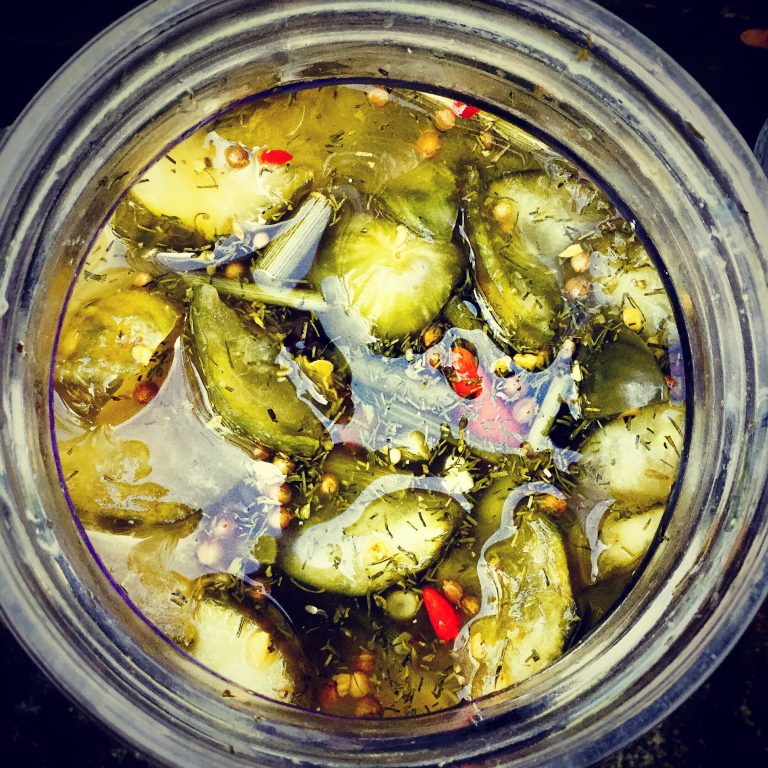
What we’d change today: we didn’t measure the water, so the salt level is unknown. We’d now follow a measured recipe (like the card above), weigh the cucumbers under the brine instead of stirring them, use pickling cucumbers for extra crunch, and remove any surface scum promptly – you can see some on top of the brine in one of our photos.
Our 2016 ingredients: cucumbers, garlic, dill, salt and spices.Cucumbers cut into spears.Half the dill, garlic and spices go in first.Spears packed in upright.A second jar with ginger and turmeric.Covered with brine.Scum on the surface – NCHFP advises removing it promptly.After fermenting: yellow-olive and sour.
Frequently asked questions
How long do fermented pickles take?
Half-sours take about 3–7 days. Full-sours take about 3–4 weeks at 70–75°F (21–24°C), or 5–6 weeks at 55–65°F, according to NCHFP.
How much salt is in fermented pickle brine?
The NCHFP recipe uses ½ cup of salt, ¼ cup of 5% vinegar and 8 cups of water per gallon of container – 2 tablespoons of salt per 2 cups of water for a quart jar.
Why cut off the blossom end?
The blossom end can contain enzymes that soften pickles. NCHFP recommends trimming a 1/16-inch slice from it.
Why are my fermented pickles soft?
Usually old or overripe cucumbers, an untrimmed blossom end, too little salt, or fermenting above 80°F. Discard pickles that are soft and slimy or smell bad.
Is the white scum on my pickles safe?
Surface scum and yeast are common; NCHFP advises removing them promptly. If the pickles become soft, slimy or smell disagreeable, or you see fuzzy colored mold, throw them out.
Can I use regular salad cucumbers?
Yes, cut into spears, but they're wetter and soften sooner than small pickling cucumbers. Use them fresh and eat them sooner.
How long do fermented pickles last?
Fully fermented pickles keep about 4–6 months in the refrigerator, according to NCHFP. Half-sours are best eaten within a few weeks.
Are fermented pickles the same as the pickles in the store?
Most shelf-stable store pickles are made with vinegar and heat-processed, so they have no live bacteria. Refrigerated pickles labeled as fermented or naturally fermented may contain them.
Sources
National Center for Home Food Preservation. Dill pickles (fermented). Link
National Center for Home Food Preservation. Causes and possible solutions for problems with fermented pickles. Link