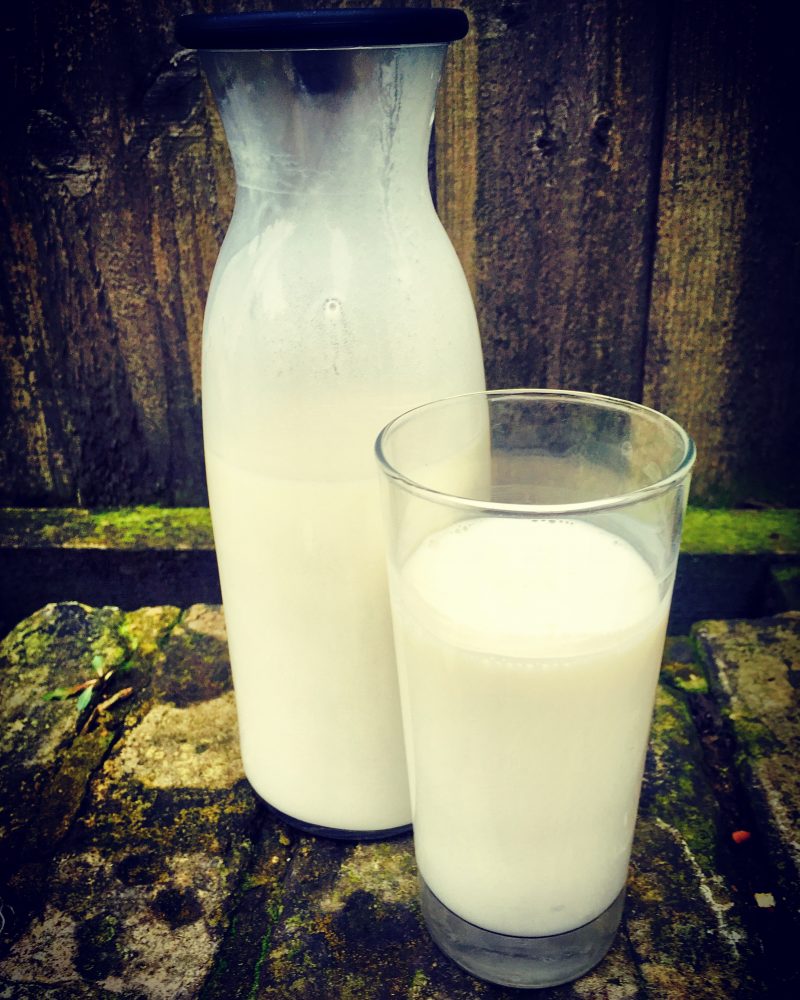
Homemade yogurt needs only milk, a few spoonfuls of plain yogurt with live cultures, a thermometer and a way to keep the milk warm for a few hours. The method is the same whatever you incubate it in: heat the milk to about 85°C, cool it to 43–46°C, stir in the starter, and keep it at roughly 40–45°C until it sets – usually 4–8 hours. The recipe card below has the details. How yogurt’s range compares with other ferments is in our fermentation temperature chart.
Why Each Step Matters
- The cultures. Yogurt is made by two heat-loving bacteria, Streptococcus thermophilus and Lactobacillus delbrueckii subsp. bulgaricus – in the US, a product must be cultured with them to be called yogurt (21 CFR 131.200). A spoonful of plain yogurt whose label lists live cultures carries both.
- Heating to 82–85°C (and holding it there a few minutes) changes the milk proteins so they set into a thicker, smoother gel, and reduces competing microbes.
- Cooling to 43–46°C before adding the starter: much hotter and you’ll weaken or kill the cultures; much cooler and they work slowly, giving a thin, sour or slimy result.
- Keeping it warm and still for 4–8 hours lets the bacteria turn lactose into lactic acid, which sets the milk. Longer makes it tangier.
Use pasteurized milk – raw milk can carry harmful bacteria, and fermentation doesn’t reliably make it safe (CDC). UHT milk works too, and you can skip the heating step with it. A few spoonfuls of milk powder per litre make a thicker yogurt.
Three Ways to Keep It Warm
- Oven or towels: pour into pre-warmed jars, close, wrap in a thick towel and put in an oven with just the light on (check it stays about 40–45°C), or in an insulated cooler with a jar of hot water.
- Multicooker yogurt setting: heat, cool and incubate in the same pot.
- Thermos: pour the inoculated milk into a pre-warmed vacuum flask and leave it 6–8 hours – good for small batches.
Greek Yogurt and Labneh
Strain set, chilled yogurt in a cloth-lined sieve in the fridge: 2–4 hours gives Greek-style yogurt; 12–24 hours gives spreadable labneh. Straining concentrates the protein: plain whole-milk yogurt has about 3.5 g protein per 100 g (USDA), and Greek yogurt more than twice that.
Cream can be soured too, at room temperature and with a different culture from the one yogurt uses: that gives sour cream and crème fraîche. See cultured buttermilk, sour cream, crème fraîche and butter.
Live Cultures and Lactose
Homemade yogurt is full of live cultures, and the European Food Safety Authority accepts that live yogurt cultures improve lactose digestion (EFSA, 2010) – one reason many people who struggle with milk can eat yogurt. Compare it with kefir in kefir vs yogurt. For a non-dairy version, see our dairy-free fermented foods guide (soy milk sets best), and for a Balkan style, Bulgarian kiselo mlyako.
Troubleshooting
- Didn’t set after 8 hours: the milk was too hot when the starter went in, the starter wasn’t live, or it got too cool. Check temperatures with a thermometer and use fresh live yogurt.
- Thin or runny: heat the milk properly to 85°C, add milk powder, use whole milk, and don’t move the jars while setting.
- Too sour: incubate for less time and refrigerate as soon as it sets.
- Lumpy or separated: it got too hot or fermented too long; stir it smooth, or strain it into Greek yogurt.
- Pink, orange or fuzzy growth, or a bad smell: discard it and start again with a fresh starter.