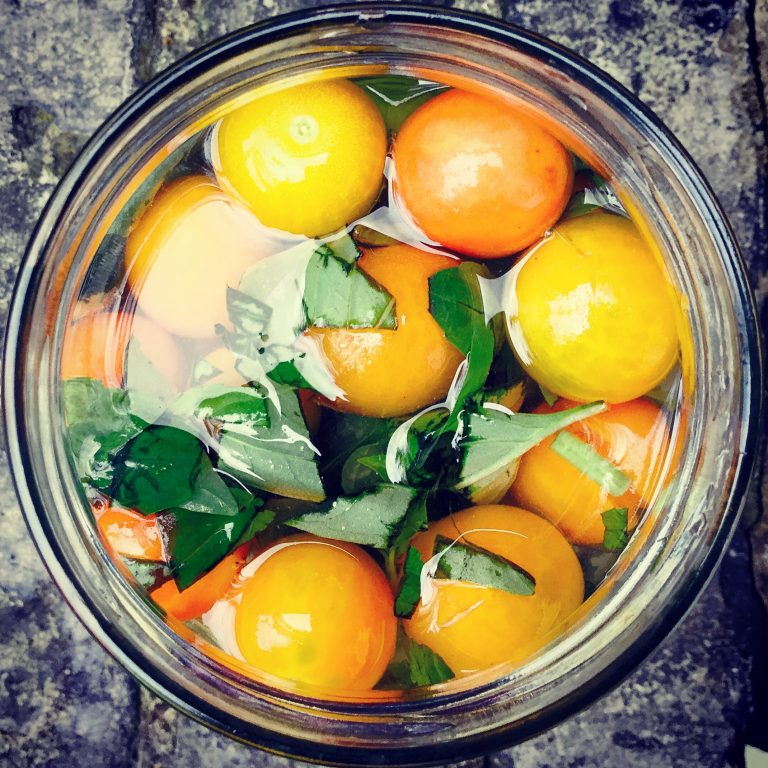
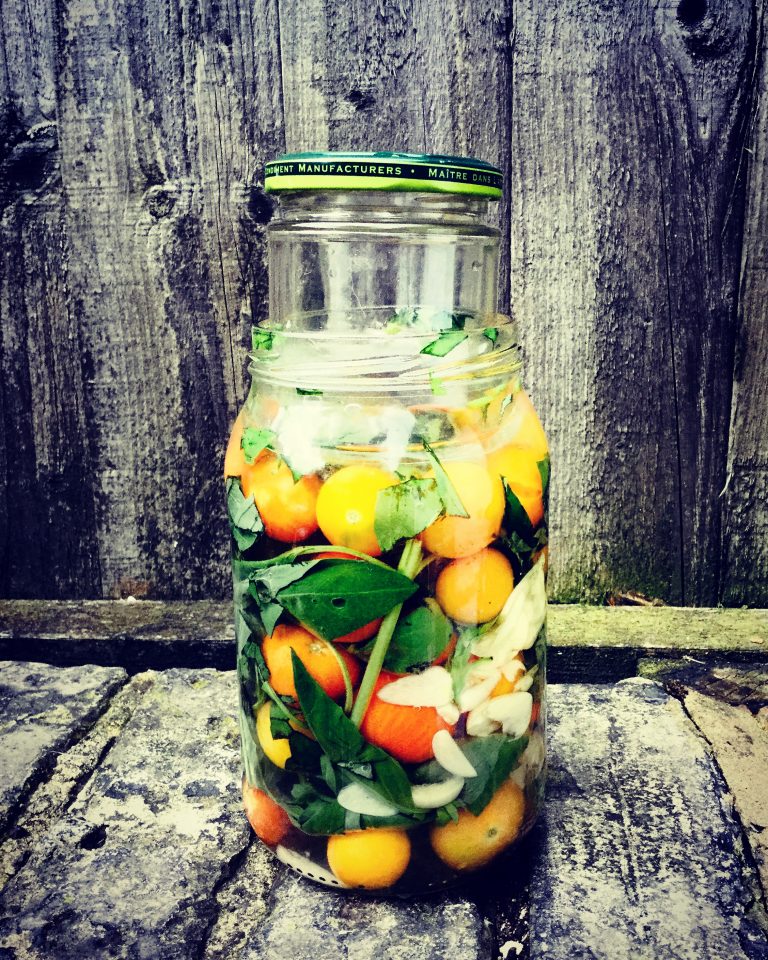
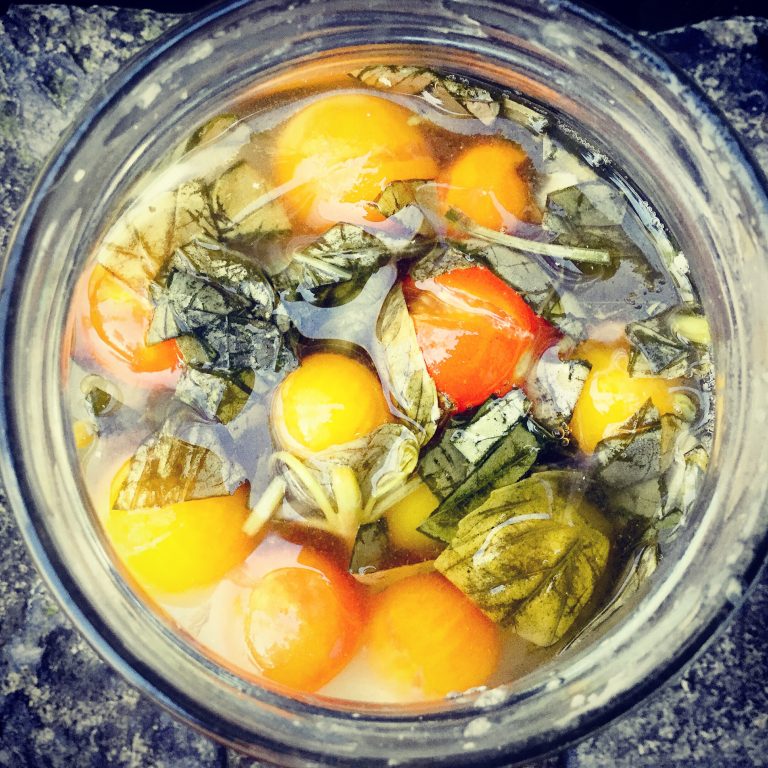
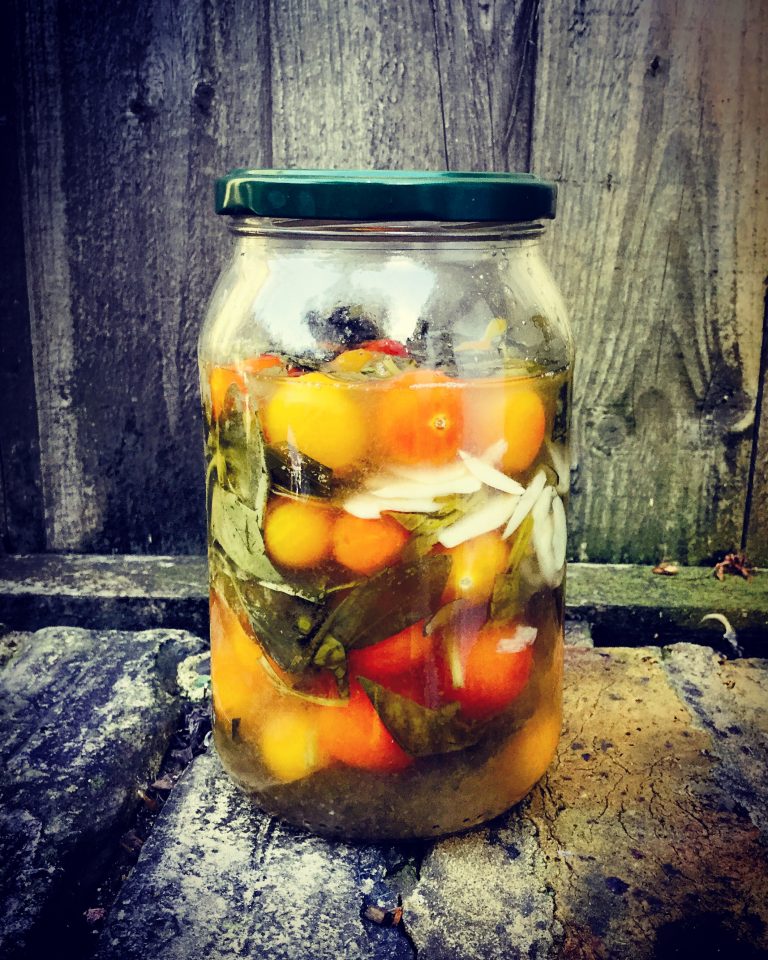
Fermented tomatoes are ripe tomatoes salted and left at room temperature for a few days, until they turn tangy, lightly fizzy and savory. There are two easy ways to do it: chopped tomatoes with 2% salt, which ferment in their own juice in 3–5 days and make a great salsa or sauce base; and whole cherry tomatoes in brine, which take a week or two and stay whole. Both are below, including the cherry tomato batch we made and photographed in 2016.
Method 1: Chopped Tomatoes (Salsa Base)
This is the recipe in the card above. The key is salt by weight: 2% of the tomatoes’ weight – 18 g for 900 g (2 lb). The salt pulls out the juice, the tomatoes sink into it, and lactic acid bacteria sour them in a few days. Firm, meaty tomatoes such as Roma or plum give a thicker result; juicy slicing tomatoes work but release more liquid.
To turn it into salsa: drain the fermented tomatoes (keep the liquid), chop them, and mix with diced onion, chili, chopped cilantro and lime juice, loosening with a little of the liquid. See also our fermented salsa.
Method 2: Whole Cherry Tomatoes in Brine
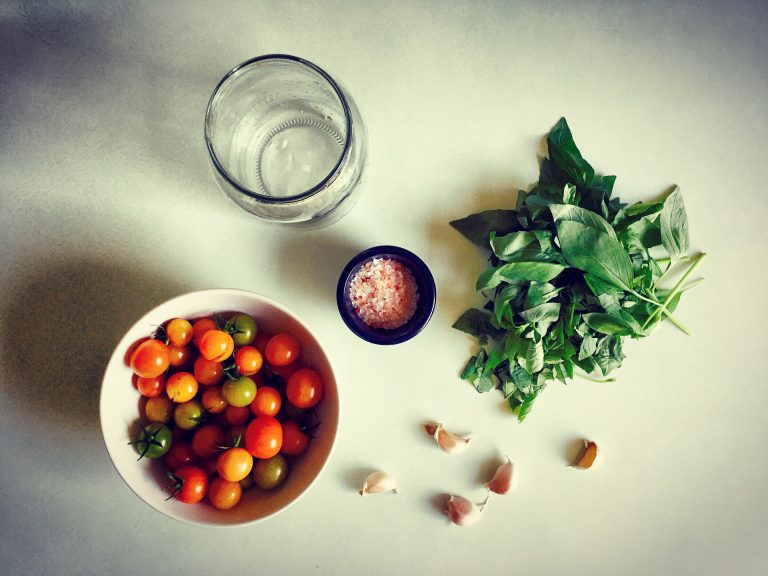
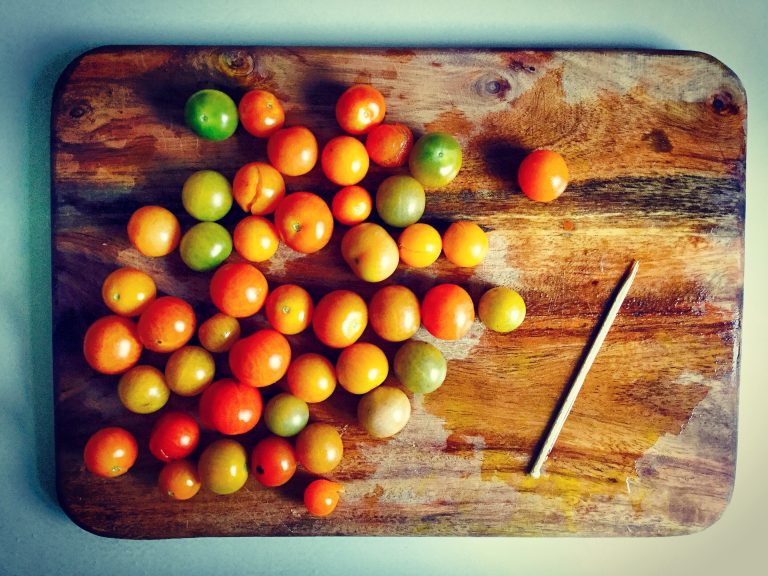
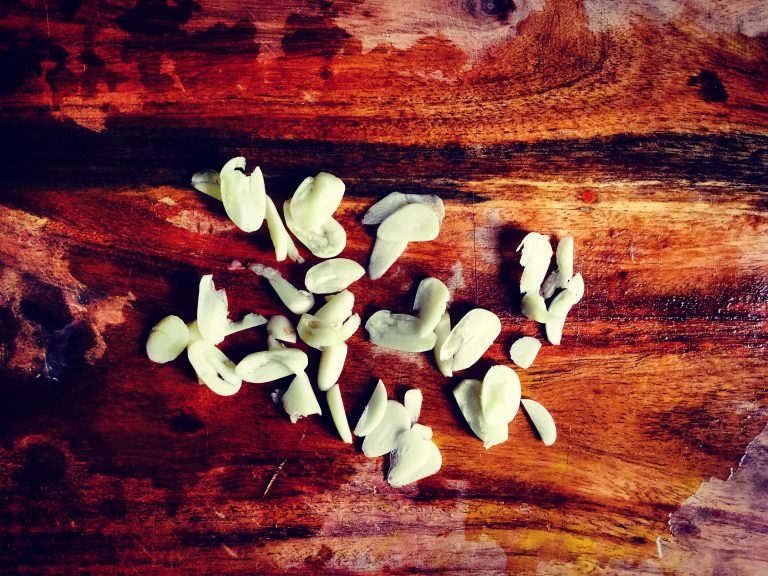
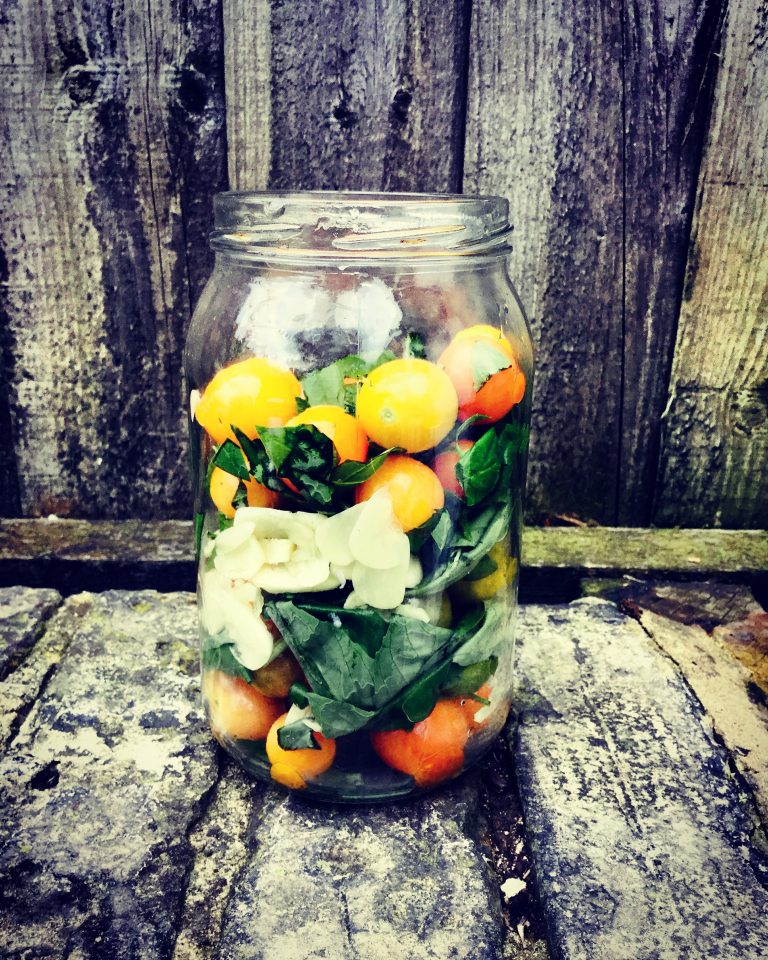
Poke each cherry tomato a few times with a toothpick so the brine can get in, layer them in a jar with garlic and basil, and cover with a 3% brine – 15 g of salt per 500 ml of water. Weigh them down, cover loosely and leave for 7–14 days. They stay whole and turn tangy inside, and the brine takes on the garlic and basil. Use them on salads and cheese boards or burst them over pasta.
What to Expect
- Bubbles and cloudiness in the first few days – normal, and a sign fermentation has started.
- Foam on chopped tomatoes – skim it off.
- Softening – tomatoes soften more than harder vegetables; that’s why chopped tomatoes suit sauces.
- Timing: chopped, 3–5 days; whole cherry tomatoes, 7–14 days, at 65–75°F (18–24°C). Warmer is faster.
Troubleshooting
- White film: a flat, smooth film is usually kahm yeast. Skim it and keep the tomatoes submerged. Fuzzy or colored growth is mold: throw the batch away (NCHFP).
- Tomatoes floating: weigh them down with a small jar or a brine-filled bag – anything above the liquid can mold.
- Very mushy or slimy: too warm, too long or overripe tomatoes. If it smells rotten, discard it.
- Not sour after 5 days (chopped): probably too cold – move it somewhere warmer.
- Too salty: use the tomatoes in cooked sauces, where the salt counts as seasoning.
How to Use Fermented Tomatoes
- A no-cook pasta sauce, blended with olive oil and basil.
- A base for salsa, pizza sauce or gazpacho.
- Stirred into soups and stews at the end of cooking.
- The liquid in dressings, or in a Bloody Mary.
Cooking kills the live bacteria but keeps the flavor. Unripe fruit makes a different ferment – see fermented green tomatoes. More: fermented carrots, the best vegetables to ferment and how to store fermented foods.