Fermented Dairy

Dairy-Free Fermented Foods: Soy Yogurt, Coconut Yogurt and What Actually Works

Discover 8 dairy-free fermented foods you can make at home: coconut yogurt, cashew cheese, plant-based kefir, and more. Complete recipes with probiotic content details.

At a glance

The most reliable dairy-free fermented food to make at home is soy yogurt: soy milk has enough protein to set without thickeners, using a live plant-yogurt starter at 40–45°C for 6–12 hours. Store-bought plant yogurts vary widely – soy comes closest to dairy in protein, and many aren't fortified with calcium, vitamin D or B12. Skip fermented raw-cashew cheese (linked to Salmonella outbreaks) and rejuvelac.

  • Only 45% of 249 US plant yogurts had calcium fortified to at least 10% of the daily value.
  • Soy-based yogurts come closest to dairy yogurt in protein; coconut-based ones are low in protein and high in saturated fat.
  • Soy yogurt sets at 40–45°C in about 6–12 hours with a live-culture starter.
  • Three North American Salmonella outbreaks (2013–2021) were linked to fermented cashew cheese.
  • Homemade rejuvelac contained no lactic acid bacteria in a 2026 analysis.

If you avoid dairy, you can still eat fermented foods: plant “yogurts” made with live cultures, fizzy water kefir, tempeh, miso and natto, and all the lacto-fermented vegetables from sauerkraut to kimchi. This page covers the dairy-replacement part – what plant yogurts are, which one is easiest to make well at home, and two popular “dairy-free ferments” we don’t recommend.

Do You Need to Avoid Dairy?

It depends on why. People with a milk allergy or who eat vegan need plant-based options. If lactose is the only problem, fermented milks may still work: the live cultures in yogurt help digest its lactose – a health claim the European Food Safety Authority accepted (EFSA, 2010) – and many people with lactose intolerance tolerate yogurt and kefir better than milk.

Plant Yogurts Are Not Nutritional Copies of Dairy Yogurt

Two label surveys show how much they vary:

  • Of 249 non-dairy yogurt alternatives sold in the US, only 45% had calcium fortified to at least 10% of the daily value, and only about one in five had that level of vitamin D or B12. Half were high in sugar. Coconut-based products were the only group high in saturated fat (Craig & Brothers, 2021).
  • Of 98 fermented plant yogurts in Switzerland, soy-based ones came closest to dairy yogurt in protein, while coconut-based ones were lower in protein and higher in saturated fat and calories. Only 18% were fortified, and swapping dairy yogurt one-for-one for unfortified versions lowered modeled intakes of calcium, iodine, B12 and other nutrients (Barth et al., 2026).

So when you buy, look for plain, unsweetened products with live cultures listed on the label and added calcium, vitamin D and B12. When you make your own, start with a fortified soy milk if those nutrients matter to you.

Soy Yogurt: the Most Reliable One to Make

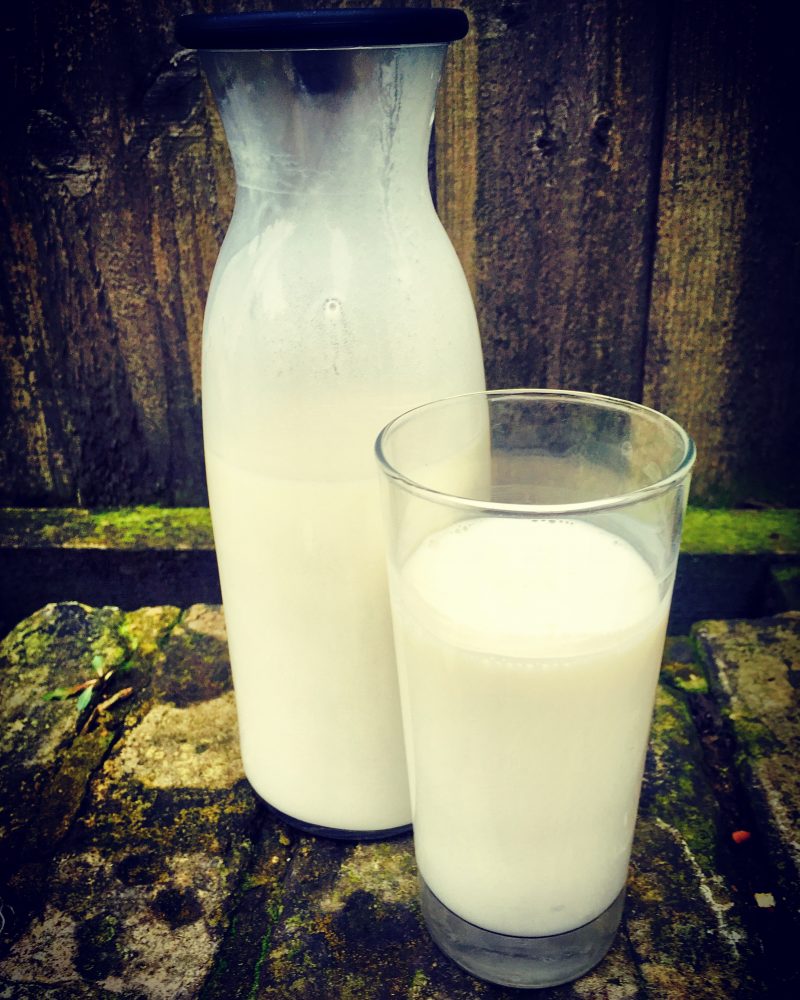
Soy milk has the protein to set into a spoonable yogurt without thickeners, so it behaves most like dairy milk. Use a soy milk made from just soybeans and water (plus added calcium), and a starter that really contains live cultures: a few spoonfuls of a plain plant yogurt whose label lists them, or a packet of dairy-free yogurt starter. Then hold it warm, 40–45°C, until it sets (recipe card below) – the same method as making dairy yogurt at home.

Opened probiotic capsules are a poor starter. Supplement strains are chosen to be taken as pills, not to sour and thicken milk quickly, and a weak start gives other bacteria a chance.

Coconut Yogurt

Coconut milk is rich but low in protein and sugar, so it doesn’t set on its own. The same method works with full-fat coconut milk if you add a teaspoon of sugar for the culture and a thickener such as agar (heat it in, then cool before adding the starter); it thickens further in the fridge. Expect a dessert-like yogurt with little protein, and more saturated fat than soy.

Two Dairy-Free Ferments We Don’t Recommend

  • Fermented raw-cashew “cheese”. Between 2013 and 2021 there were three salmonellosis outbreaks in North America linked to cashew cheese made from soaked, fermented cashews. Raw cashews can carry Salmonella (Louvau & Harris, 2023), and in a UC Davis experiment, Salmonella on soaked cashews held at 24°C grew more than 100,000-fold in a day without a starter – and still grew with a starter culture; adding salt or citric acid didn’t change that (Louvau et al., 2024). The many online recipes that leave blended raw cashews on the counter for 1–2 days skip this step entirely. For a cashew spread, blend it with lemon juice and keep it in the fridge instead of fermenting it.
  • Rejuvelac. Water fermented with sprouted grain is often used as a “probiotic” starter for nut cheeses. In a 2026 analysis of homemade quinoa rejuvelac, there were no lactic acid bacteria at all – the drink was dominated by environmental bacteria such as Pseudomonas and Enterobacter (Brasileiro et al., 2026).

Other Dairy-Free Fermented Foods

For a fizzy drink with live yeasts and bacteria, water kefir is easy and quick (how it compares with kombucha). For protein, fermented soybeans such as tempeh, miso and natto are covered in our fermented soybean guide. And if the goal is live cultures every day, see fermented foods to eat every day.
Recipe: Homemade Soy Yogurt

Makes
About 1 litre
Hands-on
10 min
Fermentation
6–12 hours at 40–45°C
Temperature
40–45°C (104–113°F)
Difficulty
Easy

Equipment

  • Clean 1-litre glass jar or jars
  • Thermometer
  • Yogurt maker, oven with the light on, or an insulated cooler with warm water

Ingredients

  • 1 litre unsweetened soy milk (ingredients: soybeans and water; calcium-fortified if possible)
  • 1 tsp sugar (optional; helps the culture get going)
  • 3 tbsp plain plant yogurt with live cultures (or dairy-free yogurt starter, as directed on the packet)

Method

  1. Warm the soy milk to 43°C (110°F). If it's a fresh, refrigerated soy milk rather than a shelf-stable one, heat it to 85°C first, then cool to 43°C.
  2. Stir the sugar into the milk, then whisk in the starter until smooth.
  3. Pour into the clean jar, cover and keep at 40–45°C without disturbing it.
  4. Check from 6 hours: it's ready when it has set and tastes clean and tangy. Most batches take 6–12 hours.
  5. Refrigerate for at least 4 hours; it firms up as it chills. Eat within about a week.
  6. Keep 3 tbsp to start the next batch, and go back to a fresh starter if batches become slow or thin.

Frequently asked questions

What is the best dairy-free fermented food?

For a yogurt replacement, soy yogurt: it's closest to dairy yogurt in protein and sets well at home. For variety, water kefir, tempeh, miso and fermented vegetables are dairy-free too.

Do plant-based yogurts have probiotics?

Only if live cultures were added after any heat treatment – check the label. Many are thickened plant milks with cultures, and some have no live cultures at all.

Can I use probiotic capsules to make vegan yogurt?

It sometimes works, but it's unreliable: supplement strains aren't selected to sour and thicken milk quickly. A spoonful of live plant yogurt or a yogurt starter is more dependable.

Why didn't my coconut yogurt thicken?

Coconut milk has little protein, so it can't set like dairy or soy. Use full-fat coconut milk, add a thickener such as agar before fermenting, and chill it well.

Is fermented cashew cheese safe?

Commercial producers have had Salmonella outbreaks, and research shows Salmonella from raw cashews can grow during fermentation even with a starter. We don't recommend fermenting raw cashews at home.

Is soy yogurt as nutritious as dairy yogurt?

It's similar in protein but usually lower in calcium, iodine and vitamin B12 unless fortified. Use a fortified soy milk, or buy a fortified product.

Sources

  1. Craig WJ, Brothers CJ (2021). Nutritional content and health profile of non-dairy plant-based yogurt alternatives. Nutrients 13(11):4069. Link
  2. Barth N, Bogl LH, Herter-Aeberli I (2026). Fermented plant-based yogurt alternatives in Switzerland: nutritional adequacy and fortification practices. Front Nutr 13:1899857. Link
  3. Louvau HS et al. (2024). Behavior of Salmonella during preparation of a fermented cashew cheese analog. J Food Prot 87(8):100311. Link
  4. Louvau H, Harris LJ (2023). Levels and distribution of Salmonella in naturally contaminated cashews. J Food Prot 86(8):100109. Link
  5. Brasileiro CG et al. (2026). Assessing food safety risks in homemade fermented beverages: a case study with quinoa rejuvelac. Life 16(4):556. Link
  6. EFSA NDA Panel (2010). Live yoghurt cultures and improved lactose digestion. EFSA Journal 8(10):1763. Link
Share: